Wednesday, July 15, 2020

How Much SPF to Wear This Summer

In the excitement of the summer season, it’s easy to forget you need to take extra steps to ensure you are staying sun-safe with ample SPF. For the unacquainted, SPF refers to “sun protection factor,” or the amount of harmful UV-A and UV-B rays that your sunscreen filters out. The higher the SPF, the higher your protection against photo-damage that can cause skin cancer and premature aging.

Of course, you might have some questions—like, do I really need an SPF 70? Do my kids require more sunscreen than I do? Does clothing that boasts additional SPF really work? To answer all your burning questions about SPF (excuse the pun), we asked two top dermatologists to weigh in. Here’s what they had to say.

How much SPF should I wear on my face? 

Dermatologists will recommend everyone wear at least SPF 30 and apply every two hours, according to Orit Markowitz, MD, board-certified dermatologist and the Director of Pigmented Lesions and Skin Cancer at Mount Sinai Hospital in New York City. “However, your head and neck are areas that get the most exposure and especially your nose, which is why 80 percent of skin cancers occur on the head and neck,” says Markowitz. She recommends bumping your SPF up for face if you can, “reapplying at least every two hours.”

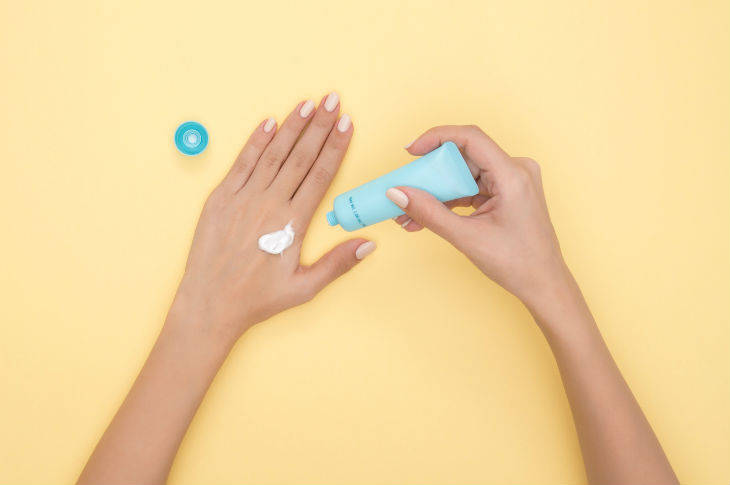
Also, people typically apply way too little sunscreen, says Josh Zeichner, MD, Director of Cosmetic and Clinical Research in the Department of Dermatology at Mount Sinai Hospital. “In order for you to get the level of protection labeled on your bottle of sunscreen, you must apply enough,” he explains. “I typically recommend a quarter size dollop of sunscreen for the face.” 

How about on my body?

Clothes won’t necessarily protect you completely from sun exposure. “A white cotton T-shirt will typically have a SPF of 15, meaning that you are protected for only 15 minutes in the sun,” says Markowitz. “Therefore your morning routine should include applying sunscreen of at least 30 SPF on your body, similar to your face, every day.”

To cover your whole body, you will need enough sunscreen to fill a shot glass. “That means a quarter-sized amount for each of your arms, two quarter-sized amounts for your chest, two for your back, two quarter-sized amounts for your abdomen, and four quarter-sized amounts for each of your legs,” says Zeichner, who expects this is a lot more sunscreen than you’ve ever used before. “If you still have the same tube of sunscreen on Labor Day that you bought for Memorial Day, you are not using enough.” He says a typically-sized four-ounce bottle of sunscreen could easily be used in one week if you are applying enough to your whole body.

How much SPF should my kids wear? 

Zeichner says kids should still be wearing at least SPF 30, just like adults. “In children, I usually recommend a mineral-based sunscreen that uses zinc oxide, and because children are smaller than adults, you don’t need as much volume,” he says. For this, you’re going to want to eyeball the difference. If they are half your size, give them about half as much as you’d put on yourself.

Monitor your kids’ application, and make sure they reapply, says Markowitz. If they are exercising, sweating, or spending time in the water, they should reapply more often. “The best way to get children on board with wearing sunscreen is to model good sunscreen habits and as a parent apply sunscreen, and reapply often with your children,” she explains.

Is SPF makeup typically as protective as applying sunscreen as an individual step in your skincare routine?

You probably use additional sunscreen on your face, even if your makeup contains SPF. While some brands of makeup do contain enough SPF, Zeichner says most people aren’t applying as much makeup as they should SPF. With that in mind, it’s better to play it safe and use both. “However, using makeup with SPF over your traditional sunscreen will give you an added layer of protection,” he stresses.

Markowitz recommends that patients “apply sunscreen during their morning routine, after they moisturize and before they apply their make-up” in order to “stress the importance of using sunscreen whenever possible.”  

Does SPF clothing work? How does it work?

Indeed, it does. Since SPF is regulated by the FDA, anything—whether it’s sunscreen, cosmetics, or clothing—you can trust the products work the way they are supposed to. “Clothing with protection from the sun is typically labeled as having UPF, or ultraviolet protection factor,” says Zeichner. “It essentially works by physically blocking UV rays from penetrating through the fabric into the skin.”

Makowitz is a big fan of SPF clothing, saying it “works very well as it provides a physical barrier against UVA and UVB rays,” whether it’s created with a tight weave or through fabric additives that essentially provide additional protection against harmful UV rays. Garments typically can be assigned SPF up to 50+, says Markowitz.

How frequently should I apply SPF? 

Every two hours, says Zeichner. If you go on a run and sweat a lot, reapply immediately. If you’ve been in the pool or ocean, reapply immediately when you get out. 

Is getting a tan bad, even if I use sunscreen and never burn? 

In short, yes. “Getting a tan, even if you use sunscreen and never burn, is a bad idea,” says Markowitz. “Constant sun exposure overtime without sunburns may still lead to skin cell deterioration, wrinkles, and eventually skin cancer.” Fair-skinned people especially tend to develop skin cancer much faster and easier with regular unprotected sun exposure, though darker complexions are still at risk of skin cancer.

If you are tanning at all, you know you are getting exposed to harmful UV light and “may cause long-term damage to the skin,” says Zeichner. So, try to prevent a tan; don’t encourage it.

Are sunscreens safe? What are EDCs, and are they found in sunscreen?

Some studies have shown that chemical ingredients in sunscreen can be found in the bloodstream, says Zeichner. “These studies are very controversial, because they do not necessarily represent the way we use sunscreen in the real world,” he says. “In the studies, large amounts of sunscreens were used under maximal conditions, which is at a much higher level than we normally do when we are out and about.” Zeichner believes if sunscreen was unsafe, we’d be seeing more widespread health problems. “That being said, for people who are uncomfortable using chemical sunscreen ingredients, there are a variety of mineral blockers on the market,” he explains.

Markowitz says “most mineral and physical sunscreens are safe,” but “sunscreens with chemical blocker ingredients such as oxybenzone” are considered an endocrine-disrupting chemical (EDCs) and “have been shown to alter some functions in the human body related to hormone production.” Check your labels; it’s better to stay away from this ingredient if you can.

What’s the best time of day to be in the sun vs. the time when the sun is most damaging and should be avoided?

If you are very fair or have the choice, you may want to avoid a lot of concentrated sun exposure during peak UV damage. “Smartphone weather apps now provide daily UV levels, which you can use to determine what time of the day is best for limited sun exposure,” says Markowitz. “In general, peak sun exposure hours are between 10 AM to 4 PM daylight savings times.” That said, “you can get harmful exposure even on cloudy days or outside of these peak hours,” so still wear your sunscreen, she explains.

I got a sunburn; what’s the best way to care for it? 

Sometimes, simple measures work well. “Make sure that you are using a gentle skin cleanser to remove any excess sunscreen and sand from your skin; harsh scrubs may cause irritation to sunburn skin,” says Zeichner. He recommends a “breathable moisturizer,” which will “form a protective seal,” ultimately allowing for the skin to heal underneath.

Markowitz recommends a slightly different approach. First, immediately apply a cold-water compress, followed by an over the counter hydrocortisone one percent cream “to minimize discomfort,” she says. You may also want to try Advil or Tylenol. “You can also apply refrigerated, thick moisturizer such as Eucerin cream,” she says. Again, this should aid in the healing process.

I know I can get burned when it’s cloudy or sunny; is one worse than the other, or is it the same?

Zeichner says it’s a sunburn that occurs while it’s cloudy outside is arguably higher risk, because you are more likely to be outside with zero protection. When it’s especially sunny, you’re more likely to reach for SPF.

Make sure to wear your SPF, no matter the forecast. “Harmful UV rays can penetrate clouds,” says Markowitz. “Because you cannot see the sun doesn’t mean that harmful UV rays are not present. A burn is the same whether it’s obtained on a cloudy or sunny day as it is simply the result of persistent damaging UV exposure.” 

SPF can be found in a stick, spray, or lotion. Is any one superior to the others for its staying power, coverage, etc? 

Markowitz prefers creams for their protective powers. “The thicker a sunscreen, the longer it’s ‘staying power’ and the better it’s coverage,” she says. “I often recommend to my surfer patients to carry a stick in the zipper pockets of their wetsuits for reapplication while they wait for their next wave.” She likes sticks and thick lotions versus aerosol sprays and powders, “because they last longer through heavy perspiration, water sports, or even typical daily activities.”

Okay, so what else did we miss about SPF?

Zeichner wants to issue a word of caution about shade. “Sitting under an umbrella is not enough [to protect you from UV rays],” he says. “Studies have shown that wearing sunscreen still gives better protection against sunburn than just sitting under an umbrella. This is likely because UV light reflects off of the sand and water.” 

So, make sure you are wearing sunscreen, in addition to sitting under your umbrella. It’s a hassle to remember to apply SPF all the time, but since skin cancer can be prevented, it is literally life-saving.

Find out how to properly read a sunscreen label here.

The post How Much SPF to Wear This Summer appeared first on Fitbit Blog.


source https://blog.fitbit.com/spf-summer-sun-protection/

You’re Probably Emotionally Exhausted. Here’s How to Cope

If you’re feeling run down and mentally drained lately, it’s totally understandable. And it may not be just your abnormal sleeping patterns or that looming work deadline. You may be emotionally exhausted.

Licensed mental health counselor Brittany A. Johnson, LMHC, compares emotional exhaustion to physical exhaustion. “It’s like you did a full workout, worked, ran errands, did some activities with friends and family, and you are just tired,” she says. “But rather than your body being tired, it’s your mind.”

While we typically feel we can manage everyday stress and anxiety (as challenging as they can be), emotional exhaustion can feel like it’s too much to handle. It tends to happen when things pile up, and it doesn’t dissipate over a day or even a week. “If you feel like you can’t catch your breath, you don’t have the energy to recover, or like you’re just above the surface staying afloat,” it’s more than stress or anxiety, explains Kruti Patel, PhD, clinical psychologist at Deep Eddy Psychotherapy.

Emotional exhaustion may happen if you don’t process the feelings that pop up as life throws you curve balls. “When stress comes up, even though it may be a time when we feel the need to keep going, it’s a time when we need to slow down most and take care of ourselves,” Patel says. Emotional exhaustion is more likely to occur when you are thinking about many things at once, which is only exacerbated by being flooded with information on social media, in regular media, and during conversations, Johnson adds.

While anyone may experience emotional exhaustion at any time in their life, those who are highly sensitive, grew up in chaotic homes, are caregivers, or have trouble processing their emotions may be more likely to feel this kind of depletion. Plus, we’re all more likely to experience it during times of fear, uncertainty, and collective upheaval, like we’re currently facing.

Additionally, anyone who deals with impostor syndrome “is trying so hard to meet so many different goals at once, so it gets stuck in their mind, and they rethink the same things all day long,” Johnson adds. And perfectionists or those who are highly critical also experience more emotional exhaustion “because they tend to put a lot of excessive stress on themselves and take on more than they can manage without asking for help,” Patel explains.

If you find yourself waking up from adequate sleep and still feeling heavy or tired, or that it’s difficult to form clear thoughts and your normal coping skills aren’t working, it may be emotional exhaustion, Johnson says. In that case, the first step is to pause and ask yourself what you need, Patel says. Then really listen and do that thing, whether it’s taking a nap, going for a walk, or reading a book. “Things won’t get better if you continue at a really fast pace. It may take some trial and error, but slowing down and trying to find what helps is better,” she adds.

Johnson also recommends pausing, and doing so mindfully at least once a day if not several times a day. “Just focus on your breathing and being present in the moment,” she says. Journaling to get your thoughts out can also be helpful, as can identifying if you can take any actions that would help change the thoughts playing on repeat in your head.

Lastly, particularly right now when we’re in a worldwide pandemic and addressing social justice issues, be choosy about how you’re staying informed. “Give yourself a break,” Johnson says. “Turn off the alerts and notifications on your phone, pick one or two trusted sources, and only go to those once a day.”

If you try to use coping skills and make changes but things aren’t improving within a week, or if your emotional exhaustion is impacting other areas of your life such as relationships, work, or your ability to function, consider seeing a therapist or psychologist for extra support, Johnson adds.

The post You’re Probably Emotionally Exhausted. Here’s How to Cope appeared first on Fitbit Blog.


source https://blog.fitbit.com/emotional-exhaustion/

Tuesday, July 14, 2020

12 Healthy-ish Treats Even Your Kids Will Love

One of the positive outcomes of the pandemic is that people are getting back into the kitchen. Many are cooking more, building confidence in the kitchen, and most believe their new healthy habit will stick around even after the crisis ends. 

If you’re one of these people, this is great news for your health. By maintaining the simple habit of making more meals from scratch, and eating fewer processed snacks and restaurant meals, you’re likely to be saving not only cash but calories, too. Homemade meals also tend to be lower in sodium, added sugars, and unhealthy fats. Plus, with families reconnecting in the kitchen, kids are learning basic cooking skills and valuable life lessons (dishwashers don’t unpack themselves, darling). So many wins!

The thing is, if your kid is like most it’s the sweet stuff that really gets them excited to get their aprons on. And let’s be honest, nothing says home like the smell of baking. But bonding over too many baked goods isn’t the best healthy eating strategy. But what if you slip in better-for-you goodies like fresh fruit, veggies, and whole grains, and stick to a sensible portion size? Then it can be! 

Here are 12 tasty (and sneakily healthy) treats to try. You know, so you get to bake your cake and eat it, too.

Zucchini Brownies

Satisfy your sweet tooth and boost your nutrient intake. Yes, these fudgy brownies do contain a little sugar. But they’ve got so much more to offer. Get the recipe.

Baked Apple Cider Donuts with Cinnamon Sugar

Wait—healthy donuts?! These treats are baked instead of fried, and sweetened with cider and cinnamon. Get the recipe.

Coconut Energy Bites

If you have a weakness for cookie dough, you’re going to love these sweet little bites. Get the recipe.

Yogurt Cake with Blueberries & Lemon

Greek yogurt adds richness and tang to this moist cake, studded with fresh berries. Get the recipe.

Chocolate-Beet Cupcakes with Cream Cheese Frosting

Don’t be scared of the beets in these moist, chocolate-y cupcakes! They make a dark, dramatic, and outrageously delicious treat. Get the recipe.

Lumberjack Pancakes with Corn & Blackberries

Sunday mornings were made for tall stacks of fluffy pancakes! Stud yours with fresh sweet summer corn and ripe blackberries. Get the recipe.

Carrot Cake Muffins

A cupcake that also doubles as a quick-and-easy breakfast? There’s a healthy recipe for that. Get the recipe.

Dark Chocolate Popcorn Balls

Popcorn balls have all the nostalgia of a childhood treat, but a few clever hacks help make them healthy. Get the recipe.

Zucchini Chocolate Chip Muffins

On days you need a grab-and-go snack, reach for these make-ahead zucchini chocolate chips muffins. Get the recipe.

Protein Muffins with Lemon & Chia Seeds

If you’re trying to get some hunger-busting protein in your baked goodies, try these mighty little muffins. Get the recipe.

Oat Scones with Cranberries & Orange

Craving something sweet? Consider baking with whole grains. These oat scones are high in fiber, and cranberries and orange zest make them cozy and bright. Get the recipe.

Carrot Breakfast Cookies

Inspired by carrot cake, these cookies are packed with oats, nuts, and seeds, to keep you satisfied until lunch. Get the recipe.

The post 12 Healthy-ish Treats Even Your Kids Will Love appeared first on Fitbit Blog.


source https://blog.fitbit.com/healthy-recipe-kids/

Monday, July 13, 2020

How to Get Away with a Lunchtime Power Workout

Setting aside time to exercise during a busy work week can feel like a job in itself. Getting up an hour before your alarm goes off or waiting until the end of the day when all you want to do is wind down can be especially tricky. 

Our solution? Midday power workouts. Studies have shown that exercise boosts your mood, energy, creativity, and even productivity levels, making it the perfect remedy for that pesky afternoon slump! 

“Most of us tend to dip around noon, so a midday workout really helps to not only bring your heart rate up and boost energy, but it’s a great shift in core body temperature, which is good for circadian rhythms,” says Holly Perkins, BS, CSCS, author of Lift To Get Lean and founder of Women’s Strength Nation. “It also reduces stress, opens up flexibility, brings blood flow to the muscles, and opens up a range of motions through the hips from sitting all morning.”

So, who says you can’t fit a quick exercise into your hour lunch break? Here are some tips to make it happen:

Set yourself up as “away” across all platforms. First things first—if possible, set yourself as away across all work platforms including Outlook, Slack, Zoom, or whatever else may cause your focus to shift while you’re getting your sweat on. Your time is limited, and you need to make the most of it! 

Schedule workouts on Sunday for the week ahead. Planning ahead is crucial to making sure your workout doesn’t get snubbed. Hold yourself accountable by making a routine before the week starts and stick to it. Unless it’s urgent, most things can wait an hour! 

Have your workout gear laid out the morning of. Waste no time looking through drawers for workout clothes during your lunch break. Lay out your exercise gear before turning on your work computer in the morning. This will save you a few crucial minutes.

Keep your workout no longer than 45 minutes. You want to make sure you give yourself enough time to freshen up after your workout, so set an alarm for 45 minutes. That way you’ll know when it’s time to hit the showers. 

Take a cold shower. No one wants to hop on a Zoom call with a sweaty or red post-workout face. If possible, hop into a cold shower and splash your face. This will cool down your body and wake you up to get back to work. You can even put cold compresses on your face to help the redness go down. Want to cut even more time off your shower? Don’t wash your hair—two words: dry shampoo. 

Eat around your workout. Since you’re working out during your lunch break, you’ll need to plan when you’ll eat as well; trust us, it’s just as important in this process as the actual exercise. 

“A typical lunch meal is not supportive fuel for a workout, but you don’t want to go into any workout completely empty,” says Perkins. “It causes too much glykachin depletion, it’s taxing on the adrenal glands, and it causes rebounding hunger and food cravings later.” 

The solution? Perkins suggests having a small snack—around 200-250 calories—that is low in fat, low in fiber, and emphasizes protein and carbohydrates, such as a banana, about an hour before you begin your workout, then immediately afterward, have a proper lunch.

Get the most out of your lunchtime exercise. So, how do you make this workout as effective as possible?  “You need to superset your exercises,” says Dylan Schenk, CEO of LIFT Society. “For example, while you’re resting from doing a set of squats, you can do a set of hip thrusts. The squats will primarily target your quads with some glute activation while the hip thrust will primarily target the glutes with some hamstring activation. This means that while you are doing hip thrusts you can rest the muscles you used in your squats and vice versa, without having to rest between sets.” 

Check out Dylan’s quick 30-minute workout below. It can be done anywhere in your home and doesn’t require any equipment. “The goal is to take each exercise at your own pace, and repeat two to five times, based on your fitness level,” says Schenk.

1. Bodyweight Squats 

2. Single leg hip thrust (each leg)

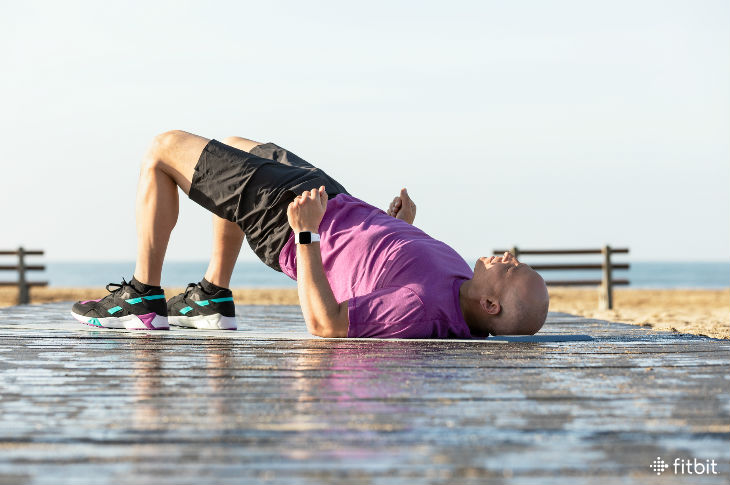
This is an example of a regular hip thrust. For a single leg hip thrust, raise one leg in the air at a time per set.

3. Reverse Lunges 

4. Push-ups (modify on knees if needed)

5. Prone pulls or Pull-ups (more advanced) – if opting for Pull-ups, you’ll need a pull-up bar in your home. You can set one up in between any door frame. 

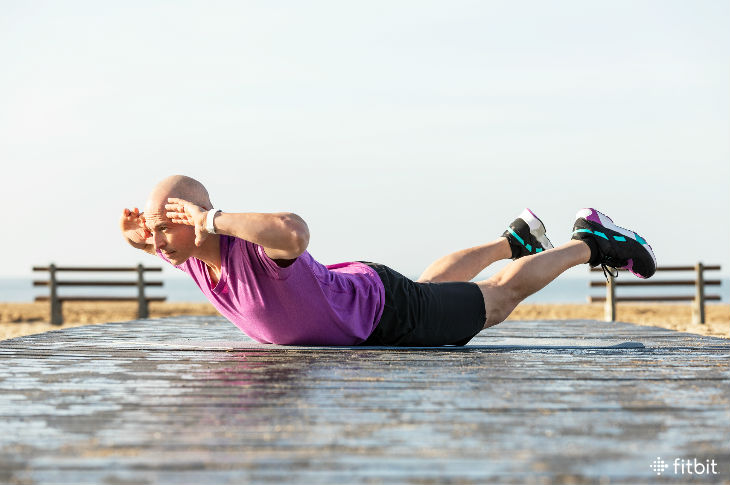
This is an example of a prone pull.

All in all, the benefits of a lunchtime power workout are many—more time at the end of your day, a midday energy spike so you can skip that 2 PM cup of joe, and just an overall boost in your mood.

The post How to Get Away with a Lunchtime Power Workout appeared first on Fitbit Blog.


source https://blog.fitbit.com/lunchtime-power-workout/

The Mental Health Effects of Social Isolation

It’s no doubt that COVID-19 has changed, and continues to change, the way we socialize. Happy hours were, and in many places remain, replaced with sporadic phone calls and texting. Work meetings are now conducted by Zoom, with more communication than ever taking place over Slack and email. Concerts have been long canceled, sporting events postponed, restaurants shuttered, reopened, and for many are now closing again.

There are fewer opportunities to connect—and it can be taxing for your health. According to a study published in 2015, researchers found the effects of social isolation, or remaining far from others, could be as profound as smoking 15 cigarettes a day, and twice as detrimental to a person’s mental and physical health as obesity. The study explains loneliness and social isolation, defining loneliness as the feeling that you are alone, whereas social isolation is making choices (or forced decisions, in this case) to be alone and avoid reaching out to others. The effect on health and longevity is similar, though, according to the study authors. 

Karla Ivankovich, PhD, a clinical counselor based in Chicago, IL, says she’s had “nonstop sessions” with people struggling from COVID-19 isolation. “Relationships have started to struggle, people are turning to inappropriate coping mechanisms to pass the time, like online shopping or drinking in excess,” she says. “People are starting to isolate now, by choice, which is a concern.” With technology to entertain us, and the advice to stay far from others, it can sometimes feel tempting to just block yourself off, or not reach out to others at all, even via phone or socially distanced gatherings, she explains. Despite the confusion and tumult of these times, people get used to new routines—of which isolating is a negative side effect, although a very important one. 

We need social connection to stay well, though. According to research, staying in touch with loved ones can ward off the effects of stress that can lead to weakened immune function, insulin resistance, gut problems, among other health issues. Ivankovich says human connection helps “decrease the risk of depression and anxiety, improving emotional regulation and overall well-being.”

Here are just some ways to socialize well this summer, even with the pandemic (and depending on where you live, shelter-in-place orders) still in full swing. 

Stay outdoors whenever possible. Dr. Jeff Pothof, chief quality and safety officer at UW Health in Madison, it’s okay to get together in small groups. “The good news is that being outdoors is better than being indoors, especially if you’re going to be around other people,” says Pothof. “We have that going for us as we get into summer.” If you do socialize with others, make sure you practice good hand hygiene; pack your hand sanitizer and use it regularly; and of course, wear a mask.

Continue to maintain distance, even if you are in a small group. States have different guidelines for how many people can socialize in the same place. But whether you’re around one other person or twelve, don’t just throw the rules of social distancing out the window. “People will focus on the number of people they can hang out with, and the things they can do,” says Pothof. “But it’s always with appropriate social or physical distancing. And that’s the thing, I think, we sometimes cheat on.” 

It’s easy to forget that your friends might be a threat to you when they don’t look sick—but it’s important to remember that people can have the virus, and pass it on, even if they don’t have visible symptoms. Always stay six feet apart while socializing. “The smaller the group, the safer it is,” Pothof says. “In our health system, we’re recommending no more than groups of 10.” (Check out the CDC guidelines for safely gathering in small groups here.) 

If you’re hosting a small group, Ivankovich suggests choosing a nice day, setting up lawn chairs outside at least six-feet apart. It’s a new kind of backyard party for the summer months.

Wear your masks. If you’re outside and appropriately distanced, a mask will provide you with “a lot of benefit,” says Pothof. Primarily, the mask prevents you from unknowingly spreading the disease to someone else when you have few or no symptoms. “During a pandemic, the mask is a gesture of how we’re on this together,” says Pothof. “I’ll protect you and you protect me, so that we can actually get back to the things we want to do because we’ve decreased transmission.” 

Bring your own food and drink. It’s more of a hassle, but it’s best to bring your own food and drink to any gathering, says Pothof. “If not, it’s hard to do buffet-style, because of the sanitation,” he says. Make sure food and drinks are individually wrapped or packaged, if you do have refreshments at an event. “It’s not as much fun as having a classic BBQ, but it’s definitely safer for this summer,” says Pothof. “And for the small inconvenience, probably worth it.”

And of course, do not share food or drinks with others. Be mindful of where you set your drink, so it’s not cross-contaminated.

Make virtual dates. For friends who might be at higher risk, or for those who may prefer not to physically socialize, set up Zoom or FaceTimes on a regular basis. This is especially critical for those who live alone, those who are single, or seniors who are at high risk of contracting COVID and generally more isolated from others, says Ivankovich. 

We need to consider new ways to stay in touch, at least for a while. “We have a new norm, whether we like it or not,” Ivankovich says. “One alternative is to be disgruntled by the situation —which is a sure-fire way to decrease our moods—or we can consider alternatives to the old way of doing things and get back to the things and people who make us happy.”  

Find your center with mindfulness tools on Fitbit Premium, including daily meditations, guided tracks, and more from 10% Happier and Aura

The post The Mental Health Effects of Social Isolation appeared first on Fitbit Blog.


source https://blog.fitbit.com/mental-health-social-isolation/

Friday, July 10, 2020

How Yoga Helps Relieve Stress

As yoga becomes increasingly more popular, many people are turning to it as an antidote for stress and anxiety. We’ve all heard that this ancient practice helps us relax, but many don’t know exactly what the stress-reducing techniques are and how they help us.

“Yoga helps relieve mental stress and anxiety by allowing time to reconnect with the present moment and putting our racing thoughts on pause,” says Kevin Ng, yoga instructor and former Fitbit ambassador. “This perspective allows us to zoom out and see the full picture versus the tunnel vision our emotions put us in at times.”

Read on to learn about the benefits behind having a yoga practice:

How does yoga relieve stress stored in the body?

Though some stress can be beneficial and even healthy, sometimes the tension can get stored in our body and negatively disrupt nearly every system and muscle. It can reduce our immune system, cause digestive discomfort, and even increase the risk of a heart attack or stroke. 

Luckily, there are a few things we can do to help reduce these risks, such as reducing our stress levels by practicing yoga. “Yes, yoga absolutely does relieve physical stress in the body,” says Ng. “By bringing awareness to the breath and to the areas in the body that need attention, it gives the body an outlet to release tension and tightness in the muscles.”

What types of yoga help with relaxation?

There are about 12 different types of yoga practices and all help relieve stress. However, Ng suggests trying all different types and figuring out which one works best for you. 

“Some practitioners love Yin or restorative yoga as a way to slow down,” says Ng. “I recommend trying different types to find what is the most enjoyable and sustainable for each individual, a consistent practice is most important for stress relief. I love power yoga for the dynamic movement that it provides, the practice of one breath to one movement doesn’t allow for thoughts to creep in and interfere.”

Here are two poses Ng suggests to help relieve stress quickly:

Head to knee forward bend (Janu sirasana). “This pose is great for all levels and is helpful in combating stress,” says Ng. “It provides a deep stretch along the side body, strengthens the back muscles, relieves tension in the shoulders and neck, stretches the hamstrings, and it provides a nice twist for digestion support.”

Standing back bend (anuvittasana) for stress relief. “This pose relieves tension in the neck and shoulders, opens up airways to allow for deeper breathing, and opens up the entire front side of the body,” says Ng. “This pose is available to all levels with variations from keeping hands at the low back for support, cactus the arms, or reaching the arms up to the sky.”

The post How Yoga Helps Relieve Stress appeared first on Fitbit Blog.


source https://blog.fitbit.com/yoga-relieve-stress/

COVID-19 Lockdowns Impacting Weight, Weight Loss, and Carb Intake

We know we’re moving less and sleeping more during the pandemic. But what about the impact on managing our weight? We looked at the aggregate data from millions of Fitbit users from the end of March, when lockdown orders were widespread, especially in the US, through the end of June to see the impact of quarantine on our weight.

First, let’s start with the good news. COVID-19 and resulting shelter-in-place orders hit the world early in the year when many of us were focused on losing that holiday weight. And, even with the pandemic, Fitbit users still weigh less now than they did in January. But, in the US, Fitbit users didn’t lose as much weight as they normally do in the winter-to-spring timeframe. 

Weight loss and gain impacted genders very differently. Women largely gained weight this spring while men were more likely to lose, indicates new data from US Fitbit users.

On average, the gains and losses have been slight, less than a pound for women of all ages except 30 to 49, who averaged a 1.4 pound gain. For men, those on the younger and older ends of the age spectrum lost weight, while the 30-59 age range stayed largely the same. 

Trends were similar in some international cities. Female Fitbit users in London, for instance, started to gain weight in April. However, certain cities like Tokyo saw both men and women maintain their weight throughout the spring.

Lockdown bread mania also manifested itself in food logging data. Carbohydrates as a percentage of calories consumed started climbing almost exactly as shelter-in-place orders started to spread across the US. It’s true, many of us turned to bread and other carbs during our time at home.

The Basics are Still Best

We wanted to see what factors that were consistent for those that lost weight as well as those who gained. According to the data, while we may be off of our normal health and fitness routines, the tried and true weight loss tactics still work—quarantine or no quarantine. Common factors among those who lost weight included:

They moved more. Steps matter. On average, users who lost more than five pounds from the end of March to late May took 1,500 more steps per day than Fitbit users who gained more than five pounds. That number of steps equals an extra five miles per week.

On average, men who lost more than five pounds took about 9,800 steps a day, while women who lost more than five pounds hit 8,400 steps a day. On the flip side, men who gained more than five pounds took, on average, less than 8,300 steps per day, and women who gained more than five pounds took less than 7,200 steps a day.

They slept well. Fitbit users who maintained their weight achieved, on average, +0.5 points more on their sleep scores than those who gained more than five pounds.

An overall sleep score is a sum of your individual scores in sleep duration, sleep quality, and restoration, for a total score of up to 100. Most Fitbit users get a score between 76 and 78—which signifies fair to good sleep scores.

Women who maintained weight during the study period had a sleep score of almost 78 while men hit 77.

Studies show getting enough high-quality sleep can positively affect your energy, activity, mood, weight, and more. Sleeping well can also help your body regulate metabolism, regulate food cravings, and enable you to make better decisions about what and when to eat.

They tracked their weight. Those users who took an active interest in their weight were able to maintain it better. On average, Fitbit users who maintained their weight weighed themselves 2.5 times more often than users who gained more than five pounds. Men weighed themselves more often than women.

Regularly hopping on the scales means you can notice small weight gains before they become bigger ones. And research agrees—regular weight checks lead to better maintenance. Daily is ideal, but if this starts to mess with your head, stick to weekly.

The post COVID-19 Lockdowns Impacting Weight, Weight Loss, and Carb Intake appeared first on Fitbit Blog.


source https://blog.fitbit.com/covid-19-weight-impact/