Wednesday, May 27, 2020

Ways to Keep the Whole Family Moving at Home

For those of us who are still hunkered down at home with family right now, it may be harder to get in a daily workout. Instead of aiming to get in that solo session, now is a great time to include the whole family. Exercise has been shown to not only support mood and cognitive function but also have a positive effect on social connection. 

Here are some ways to get in a family-wide sweat session:

Host or join a virtual dance party. Crank up your family’s favorite playlist, and break out your best moves in the comfort of your living room. Don’t forget to invite extended family to join virtually too! 

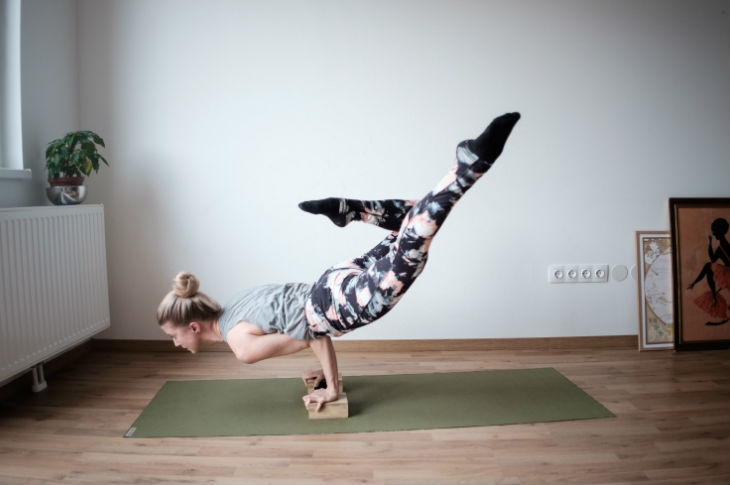
Get them into yoga. Adaptable for all ages, yoga is a great way to get everyone moving and possibly reduce a little stress. Fitbit Premium has a wide range of yoga videos with short to long practices and targeted sessions to suit the household’s needs.

Engage in some healthy competition. For those who can go outside, starting a household mini sports league or a one-on-one match in your yard may be a fun form of friendly competition.

Let the little ones take the lead. When a child plays they often move up and down, run in spurts, and use their whole body. Encourage the littlest family members to pretend like they are their favorite animal and follow along. It may feel a little silly at first but there might actually be a lot of benefits to this kind of playful movement.

Follow along with kids’ exercise programs. Websites like GoNoodle offer videos for kids to move and learn that the whole family can enjoy. Free2Play teaches foundational exercises that benefit both children and caregivers.

End each evening with a walk, when possible. As the world continues adapting our new normal, creating a new routine—that abides by local social distancing mandates—can help with the adjustment. Going for a walk with the whole family can be a great way to get in steps, create memories, and connect us to the natural world. Walking right after meals has also been shown to help control blood glucose levels in those with Type II Diabetes.

Get in the garden. For those with the ability to grow a garden, consider recruiting each family member to have their own role maintaining it. Weeding, raking leaves, and mowing can get heart rates up, plus some time spent in the sunlight has its own benefits, too.

 Find community. Every family has its own set of unique challenges during this time and maintaining health on top of this transition may feel overwhelming. Seeking new support systems who share the same values and similar struggles can help ease some of the stress. Fitbit Premium’s community groups are a great resource for connecting with others, receiving and providing support, and getting new inspiration for staying healthy.

Inspire a tidy up challenge. Getting kids to clean up after themselves can be a challenge, so why not make it into one? Set a timer for 10 minutes, turn up the music, and ask everyone to tidy up as many things as they can. Not only can this encourage everyone to get in a short burst of movement but removing the clutter can ease some stress and encourage productivity.

Be a role model. Not everyone in the household may enjoy exercise to the same degree but consistent modeling of an active lifestyle can encourage other family members to get up and move as well.

A version of this article was originally published by Allison Schwartz on the Fitbit Health Solutions blog. 

The post Ways to Keep the Whole Family Moving at Home appeared first on Fitbit Blog.


source https://blog.fitbit.com/family-friendly-exercises/

Join Us in the Fight Against COVID-19

Dear Fitbit Users,

People across the globe are all working together in the fight against COVID-19. For our part, we have already been working with Scripps Research and Stanford Medicine to see if Fitbit data can help identify infectious diseases. It’s important work and we were inspired to build on it.

Now, we’re announcing the first-ever Fitbit COVID-19 Study, an unprecedented study designed to see if wearing a Fitbit can identify COVID-19 in its earliest stages. It’s a chance to find out if the technology we’ve built to help you get healthy might help prevent you and your family from getting sick.

It’s a big goal. But big goals are in our DNA. Over the past two months, we’ve been preparing the technology, the teams, and the partners to bring this study to life. Now, we need your help  to make a potentially game-changing scientific breakthrough. 

If you are over the age of 21 and living in the United States or Canada—and especially if you have had or currently have COVID-19 or symptoms consistent with the flu—we ask you to join us in this fight.  All you have to do is visit the Fitbit app, sign up, answer a few questions, and continue to wear your Fitbit tracker or smartwatch. Data from your Fitbit can help create an algorithm that could detect COVID-19 before symptoms even start.

Your participation can make an incredible impact. Thank you for your support and for inspiring us to do more.

James Park, CEO & Co-founder

On Twitter @parkjames

The post Join Us in the Fight Against COVID-19 appeared first on Fitbit Blog.


source https://blog.fitbit.com/join-us-fight-covid-19/

Tuesday, May 26, 2020

No Gym, No Problem: Easy Household Substitutes for Dumbbells, Sliders, and More

If you’re a gym-goer, it may feel like you’ve run out of options lately. Most gyms are closed, some with no signs of reopening anytime soon; many sporting goods stores are also, although some may be reopening for curbside pickup. If you’ve tried to find a set of dumbbells or other exercise equipment online, you may have run into a few snags with shipping delays or lack of availability. 

The good news is that even amidst all of these obstacles, you can still get in a decent workout. For instance, some exercises don’t require any equipment at all. “You can create some pretty taxing circuits with basically anything that uses your body weight against gravity,” says Jessica O’Connell, a Canadian Olympic track and field athlete who co-founded the online athletic training company Grit Coaching with professional obstacle runner Faye Stenning. Burpees, bear crawls, jumping jacks, and planks are all viable options right in your living room (or bedroom, or basement, or backyard). Even shoes are optional! 

To go beyond bodyweight exercises, however, you’ll have to get creative and start repurposing things you already own. The following list of household items can double up as workout equipment: You can mix, match, and definitely add to the list!

Firm chair as a weight bench. You won’t be able to lie down for bench presses or skull crushers (you’re better off laying on the floor to do these), but an uncushioned chair can work well for other “weight bench” exercises. Bent-over single-arm rows and tricep dips are two examples, and you can also prop your feet up for things like decline push-ups or Bulgarian split squats. However, for step-ups, O’Connell recommends using a regular stair, for safety purposes.

Couch cushion as a BOSU. If you’re not familiar with a BOSU, it’s the item in the gym that looks like an exercise ball (or “Swiss ball”) cut in half. You use it to engage all those little muscles you need for stability and balance. Try a couch cushion to replicate this unstable surface for exercises like lunges, squats, and push-ups.

Gallon jugs as kettlebells. Buy a gallon of water—or use an empty gallon of milk—and you suddenly have a do-it-yourself kettlebell. (Clean laundry detergent jugs are another option.) Start by filling the jug with water; according to O’Connell, if you fill it to the top, a gallon of water weighs just over eight pounds or three-and-a-quarter kilograms.

Then, if you want more weight, she suggests filling the jug with gravel. Sand and loose change are two other options, depending on what you have on hand. Just remember that unlike a kettlebell, the contents in your jug can shift or slosh, so be sure that you’re engaging your core when you try this.

A variety of different household items as weights. When it comes to weights, there are a lot of options depending on (a) the exercise you’re trying to do and (b) how much weight you want. For instance, if you’re looking to do a tricep extension where ordinarily you’d lower a dumbbell behind your head, a cast-iron skillet is a great substitute for the dumbbell, because it has a handle that’s easy to grip. A standard 12” skillet typically weighs around eight pounds, so depending on size, yours will probably weigh between four and twelve pounds.

Here are some other weight substitutes:

Very light weights: canned goods (which are sold by weight, so just remember that 16oz = one pound)

Light weights: full water bottles (remember: you can fill them with sand or coins to increase the weight)

Medium weights: hardcover textbooks, wine bottles (which, if they’re screw-tops, you can fill)

Heavy weights: reusable shopping, canvas tote bags, duffle bags, backpacks, or suitcases, all of which you can fill with items (clothing, canned goods, or books, depending upon desired weight)

Dish towels as sliders. Sliders or “gliding discs” look like small, flat frisbees that you use to slide across a smooth surface with your hands and feet. O’Connell recommends dish towels or socks as substitutes on a hardwood or tile floor. “Training might not look like it normally does,” she acknowledges. “But there are probably pieces of your training that you’ve neglected, like mobility or stabilization muscles.” Slider exercises are ideal for working on these types of weaknesses. Popular moves include knee tucks, mountain climbers, curtsey lunges, and plank jacks.

The bottom line is that while you might not be able to train the exact way you want to, you shouldn’t give up. “People take breaks all the time and come back fitter,” says O’Connell. “Doing something versus nothing makes that substantially easier.” 

Consult your doctor before engaging in any of the above exercises, especially if you are prone to injuries, are pregnant or nursing, or have any other unique or special medical conditions. Substitute equipment is not a substitute for using proper form and safety precautions, and if you experience discomfort or a medical emergency, stop and consult with a medical professional.

The post No Gym, No Problem: Easy Household Substitutes for Dumbbells, Sliders, and More appeared first on Fitbit Blog.


source https://blog.fitbit.com/no-gym-no-problem/

Saturday, May 23, 2020

How to Create a Successful Morning Routine

If you’re one of many who have had to make the adjustment to working remotely, you probably know by now that it can be harder than it looks. Maybe you haven’t gotten the whole “morning routine” thing down just yet, or at this point, you may be feeling like you’re stuck in a rut with your daily routine in general. It’s easy to feel that way, and if you do, you’re certainly not alone—but that doesn’t mean you can’t break out of the rut and set yourself up for success as much as possible. 

If you’re reading this, chances are you want to make a change. The first step? Being more intentional about your mornings. Keep reading for tips and tricks on how to create a successful morning routine, especially if you’re still adapting to working remotely. 

Create a go-to morning routine with these habits 

Plan ahead according to your needs. If you’re not a morning person, chances are you won’t be at your best at 7 AM. If you’re foggy until 10 AM, don’t try to force yourself to join the early risers club right away—make it work for you instead! Or, if it can’t be avoided (say you’ve got an early meeting on Zoom, or have a tight deadline), then prep ahead of time. Jot down some notes for the meeting or set an alarm on your Fitbit watch as a reminder to get you in the zone and ready to make moves, no matter what time it is. 

Create a to-do list the day before. This will help you mentally prepare for the day ahead in advance, organizing your brain so that you can get straight to work the next morning. Be sure to list the tasks on your list in order of priority, with the more significant tasks ranked higher up than the rest. In his book, Eat That Frog! 21 Great Ways to Stop Procrastinating and Get More Done in Less Time, author Brian Tracy tells us, “‘If you have to eat two frogs, eat the ugliest one first.’ This is another way of saying that if you have two important tasks before you, start with the biggest, hardest, and most important task first.” 

The idea is that most of us have lengthy to-do lists on any given workday, and we’re not always likely to finish them. If we eat the frog first and get it out of the way, we’ll be more naturally motivated to check off the rest of our less difficult tasks in a more organic way. 

Find out what wake-up time is right for you, then stick to it. Bedtime consistency is key. You already know that a regular bedtime betters your health by improving energy, focus, and even immunity, helping you to power through your day. Keeping your circadian rhythm dialed in will also help your body to adjust and wake you up naturally at the optimal time the next morning. But if you’re still working on that, you can try using Smart Wake on your smartwatch to avoid waking yourself up while in deep sleep.  

Want to start waking up earlier? Try doing so in five- or ten-minute increments, so that you can introduce it to your schedule on a gradual basis, and make it less of a shock to the system. 

Change out of your pajamas. If you’re working remotely, this is crucial—even if it’s just changing from your sleep pajamas to your work-from-home pajamas. Hey, we’re not judging! And, if we’re looking on the bright side, it certainly is cozier to be able to work in your sweatpants. So, even if you are putting on sweats for the third time this week already, what matters here is the shift that changing from your PJ’s into your “work attire” creates in your brain, signaling that you are now ready to get to work. 

Another big one is moving from your bed to a designated work station—even if it is your couch. Need tips on creating a better work-from-home environment/ergonomic workspace? Check them out here. 

Eat a healthy breakfast. A meal with 20 grams of protein will help curb cravings and keep sugar crashes at bay. Try any (or all!) of these high-powered breakfast ideas to power your morning and get you through all those Zoom meetings on your calendar with plenty of focus. 

Go for a walk. Simulate a commute by going for a walk. Of course, this depends on what your schedule’s like on any given day, but even fitting in a brisk walk around the block can help “trick” your brain into thinking that it’s going somewhere, which will, in turn, get you to gear yourself up for work mode. If you’ve got the time, listen to an inspiring or motivational podcast during your walk—or, make it more mindful by leaving your phone at home and observing little details about your immediate scenery that you might not usually pay attention to. 

Take it easy on yourself. If you’re not able to fit in all of the components of a successful and consistent morning routine every day, that’s okay. The shift to working remotely is a new one for many of us and one that is likely to have lasting effects on our society. The same goes for productivity levels—go easy on yourself. You’re doing your best, and every day is an opportunity to start anew. 

If you need help adjusting, consider talking to a mental health provider to receive care by phone or virtually. If you’re in the US, you can use the COVID-19 resource tab in your Fitbit app to book a virtual doctor’s visit with PlushCare, a team of board-certified doctors that can address medical needs from ongoing conditions to prescription refills and more. Learn more about it here. 

The post How to Create a Successful Morning Routine appeared first on Fitbit Blog.


source https://blog.fitbit.com/morning-routine/

Friday, May 22, 2020

How to Get the Most from Teletherapy

Anyone who’s ever been diagnosed with a mental health condition knows how vital therapy can be. And even if you don’t currently see a therapist, you may be experiencing anxiety, depression, or other emotions that would be beneficial to work through with a professional. What do you do when you can’t make an in-person appointment? Use telemedicine.

Teletherapy allows you to connect with a licensed mental health professional over a video call and receive the same care you would in person. But since this is new for a lot of people—including providers—consider the following techniques to make the most of your remote therapy sessions.

Be sure you’re safe. Some therapists, but not all, use a HIPAA-compliant platform, rather than a public service like Zoom. This keeps your information private and safe, explains clinical psychologist Merva Gur, PhD. So ask what your provider uses, and be flexible. “If a patient’s internet service drops, we’ll speak on the phone until they’re back online,” she adds.

Give yourself a “commute.” If you see a therapist in person, you have the time to drive or commute there to allow your brain to shift from what you had been focusing on to what you want to work on in therapy. But when you’re working from home, it can be tempting to jump straight from a work call to therapy. Don’t. Take five or 10 minutes to get your laptop or phone set up for the session and also think about what’s happened since your last session. What challenges arose? How has your mood been? Gur tries to ask these kinds of questions at the beginning of a session to help patients transition, but not all providers do this. And even if yours does, it can help to first think these things through alone so you know what you hope to get from your meeting.

Strive for privacy. If you live in a tiny apartment with roommates or family, it may seem impossible to find seclusion for therapy. Do your best. Tell whomever you live with when you will need privacy. Consider asking your roommate to take a walk during that time, or if you have children and a partner, can they keep the kids busy so you don’t have to worry about them? If you don’t have a partner, or they aren’t available, can the baby’s nap time work? You can also see if anyone has noise-canceling headphones they can wear while you’re on the video call in the other room. And talk to your therapist, as most will be accommodating to your schedule.

Expect a change. Remote therapy will not be the same experience as therapy in an office. Your provider may ask more questions since they can’t tell, for instance, if you’ve lost or gained weight, which could be signs of depression or anxiety. If, however, any of their questions or comments discomfort you, bring it up, Gur says. “This is not the time to worry about hurting my feelings, and it’s a really good practice in asserting yourself.” You can gently ask something like, “Hmm, I’ve never heard you ask that before. I’m curious why you’d like to know that?”

Be open. Honesty is already important with therapy, as it leads to the most benefit. Now is the time to be even more open, because meeting over a video can ironically feel a bit disconnecting. “Talk about it,” Gur says. Working through these feelings may help you identify patterns in your life and then, with your therapist, you can develop tools to cope.If you’re new, share all. “It can be difficult to start with a new therapist if you haven’t met them before,” Gur acknowledges. But that doesn’t mean you can’t start therapy for the first time by using teletherapy. Consider a site like Psychology Today or Good Therapy to search for providers, and check out their websites to learn how they work with clients. Many will offer a short, free phone call before your first appointment to be sure you feel they’re right for you. Once you find the one, most will have an intake form. Be as detailed as possible. “Mine is 10 pages, and it really helps you to think about what’s going on in your life,” Gur says. “It’s super helpful right now to give me some sort of background so I can identify what would be most helpful to work on with a patient.”

The post How to Get the Most from Teletherapy appeared first on Fitbit Blog.


source https://blog.fitbit.com/teletherapy/

Thursday, May 21, 2020

Foods to Eat Right Now That Might Improve Your Mood

We all have moments of feeling down or blah and usually, a great exercise sesh can kick those doldrums to the curb. But when you’re feeling a little blue, adding mood-boosting foods to your diet may help, too. You’ve heard that you are what you eat and if the foods you’re eating are making you feel lethargic and in a funk, then it’s time to nosh on some upgraded meals.

Read on to learn more about how certain foods can boost your energy and outlook. Note that if you have been feeling down for a few weeks and can’t shake those sad thoughts, reach out to your doc to make sure it’s not something more serious, like depression.

Here’s how food impacts your mental health. There is a strong link between the mind and body. “Stress and anxiety can deeply affect your GI tract, immune system, and sleep, which in turn affects all aspects of your wellbeing,” says Brittany Modell, MS, RD, CDN, founder of Brittany Modell Nutrition and Wellness. Studies show that what you eat—and don’t eat—can influence your risk of developing mental disorders like anxiety and depression.

That’s why a nutrient-rich diet is a key component for mental wellbeing. A study in the American Journal of Psychiatry found that diets rich in vegetables, fruit, fish, and whole grains have been linked to better mental outcomes than diets that were high in processed foods, fried foods, refined grains, sugary products, and beer. 

When you’re feeling low, these foods contain nutrients shown to impact your mood.

Dark chocolate. That feeling of calm you get after nibbling this treat isn’t in your head—it’s real! Chocolate has been linked to the neurotransmitter, serotonin, a mood-altering chemical, which might explain why you feel good after eating it. Savor a small amount of good-quality dark chocolate, which is lower in added sugars and high in antioxidants. 

Berries. Take advantage of berry season this summer by adding these fruits to your meals and snacks. “Their mood-boosting nutrients include fiber, healthy carbs, and antioxidants,” says Modell. Carbohydrates fuel the production of the feel-good chemical, serotonin. 

Salmon. “The brain is constantly making new brain cells and connections between cells called synapses,” says Modell. “Omega-3 fatty acids found in fatty fish, such as salmon, can help strengthen synapses.” Those fatty acids also play a critical role in reducing inflammation, which can impair brain function. “Although the mechanism is unclear, omega-3 fatty acids may decrease the risk of anxiety symptoms by neutralizing the high concentration of pro-inflammatory cytokines often seen with depression and anxiety,” says Modell. If you’re not a fan of fish, you can get omega-3s in your diet from flaxseeds, flaxseed oil, walnuts, and canola oil.

Pumpkin Seeds. This superfood makes the good-mood food list because it’s rich in magnesium. “When you are stressed, your magnesium levels may become compromised and get depleted more easily,” says Modell. Extended periods of stress—chronic stress—may result in a progressive magnesium deficit, she says. “Magnesium helps counteract stress.” Other magnesium-rich foods include Brazil nuts, edamame, salmon, tofu, quinoa, and green leafy vegetables. 

Whole-grains. Healthy carbs like whole-grain pasta, oatmeal, brown rice, and popcorn are also on the list of foods that can improve your mood overall. (Yes, that huge white bagel might make you happy for a little while, but soon afterward you’ll experience a blood sugar crash and your energy levels will feel low again.) “Low-carb diets, such as Atkins or ketogenic diets may influence how the brain distributes and responds to the serotonin it makes,” says Modell. “A low-carb diet can [impact] mood and energy levels [negatively].”

Modell suggests to get a boost by opting for whole food carbohydrates sources, such as fruit, vegetables, whole grains, and legumes. “Refined and processed sugars have been linked with poor energy and mood swings as well as inflammation and poor mental health status,” she says.

In general, switching to a whole foods diet that has less processed foods might enhance your overall mood, advises Modell. What do you have to lose? 

The post Foods to Eat Right Now That Might Improve Your Mood appeared first on Fitbit Blog.


source https://blog.fitbit.com/mood-boosting-foods/

New Study from Fitbit Seeks to Advance COVID-19 and Flu Research with Early Detection

Wearables, like Fitbit trackers and smartwatches, are currently being used in research studies from partners like the Scripps Research Translational Institute and the Stanford Medicine Healthcare Innovation Lab to see if wearable data can help detect the early onset of infectious diseases, like the flu and COVID-19, even before symptoms start. 

Today, we are building on these partnerships with the launch of the Fitbit COVID-19 Study, available right in the Fitbit app. This study will help determine whether Fitbit can help build an algorithm to detect COVID-19 before symptoms start. If you are over the age of 21, living in the United States or Canada and have had or currently have COVID-19, or symptoms consistent with the flu, we invite you to answer a few quick questions to help contribute to this important research as Fitbit tries to develop this algorithm. 

The study features a short series of questions that can be found in the Assessments & Reports section of your Discover tab and will just take a few minutes to complete. We will ask you about:

  • Whether or not you have, have had, or may have had flu or COVID-19
  • Any symptoms you are experiencing or may have experienced
  • Additional related details regarding your medical history and demographics

These answers will be used in conjunction with other indicators in your Fitbit data to help researchers try to determine early signs of COVID-19 and flu. Participation is entirely voluntary and you can withdraw at any time.  

We appreciate you helping us work to try to better detect and respond to viral illness outbreaks, like COVID-19.

Interested in more ways to get involved in COVID-19 research efforts? Learn more about the Scripps DETECT study and the Stanford Healthcare Innovation Lab COVID-19 PROTECT wearables study here.

The post New Study from Fitbit Seeks to Advance COVID-19 and Flu Research with Early Detection appeared first on Fitbit Blog.


source https://blog.fitbit.com/covid-19-study/