Wednesday, November 11, 2020

Get a Taste of Fall With These Five Delicious Harvest Salads

Fall brings the most amazing cold-weather produce, perfect for nutritious and bountiful salads bursting with fresh fall flavors. Pair dark leafy greens with hearty and festive additions like butternut squash, brussels sprouts, figs, apples, or cranberries and voilĂ ! You have a seasonal salad that warms the soul and delights the taste buds better than any soup or casserole. Fall is the new salad season—here’s why.

Salad is a wholesome powerhouse. These salads are packed full of nutrient-rich ingredients including healthy fats, protein, leafy greens, and colorful fruits and veggies that will help keep you satisfied, energized, and power you through your day.

Salad is exciting. Yes, you heard that right—salad can be exciting! If you’re tired of the same ol’ lunch-time sandwich or leftovers from the night before, these salads are sure to shock and amaze your taste buds. The contrasting textures and temperatures of warm roasted squash or yams, crunchy apples, seeds or nuts, sweet figs or dried cranberries, and cool crunchy greens are anything BUT boring.

It’s simple to toss together. The ingredients are fresh and easy to throw into a bowl—perfect for any busy schedule. Prep your ingredients ahead of time and whip up lunch or dinner in a jiff.

Now that we know why fall is the new salad season, here’s how you can build the perfect seasonal salad in six simple steps:

Select a base. You can try arugula, spinach, kale, collards, or romaine.

Give it some crunch. Sprinkle some seeds, nuts, sliced apples, croutons, or roasted chickpeas.

Mix in something soft. Add in sweet potatoes, roasted squash, avocado slices, cheese (we love feta!), or quinoa. 

Add something unexpected. We love throwing in some dried fruit, pancetta, pickled veggies, or Brussels sprouts for a delicious surprise. 

Power up with protein. Go for chicken, steak, fish, beans, cheese, or eggs.

Dress it up. Drizzle on some extra-virgin olive oil and balsamic or apple cider vinegar. You could also opt for a dairy-based, mustard-based, or fruit-based dressing

You have the why and the how. So, what is in season now? 

  • Arugula 
  • Apples
  • Beets
  • Broccoli
  • Brussels sprouts
  • Butternut squash
  • Cabbage
  • Cauliflower
  • Chicory
  • Cranberries 
  • Eggplant
  • Figs
  • Garlic
  • Grapes
  • Kale
  • Mushrooms
  • Onions
  • Parsnips
  • Pears
  • Persimmons
  • Potatoes
  • Shallots
  • Spinach
  • Sweet potatoes
  • Turnips 

Keep reading for five seasonal salad combos we are loving right now.

Autumn Cobb with Pumpkin Vinaigrette
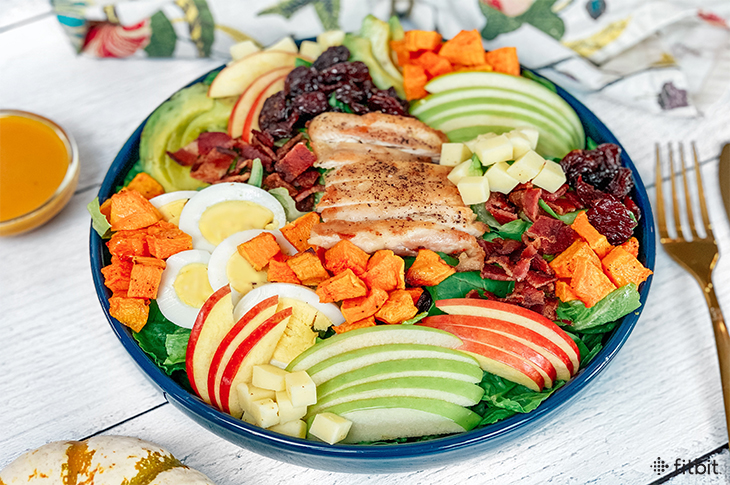
INGREDIENTS:

For the salad: 

4 cups butternut squash cubes

1½ tablespoons extra-virgin olive oil

Salt and freshly ground pepper

14 oz (400g) boneless, skinless chicken breasts 

2 slices bacon

2 large eggs

4 cups mixed greens

1 red apple, thinly sliced

1 green apple, thinly sliced

1⁄3 cup dried cherries

1⁄3 cup white cheddar cheese, cubed

For the dressing:

1⁄4 cup pumpkin puree

1⁄4 extra-virgin olive oil

1 teaspoon Dijon mustard

2 tablespoons apple cider vinegar

1 tablespoon pure maple syrup

Pinch salt

INSTRUCTIONS: 

Preheat oven to 400°F (200°C). Toss the squash in 1 tablespoon of olive oil, salt, and pepper then place onto a greased baking sheet. Roast for 40 to 45 minutes.

Place dressing ingredients into a blender and pulse 4 to 5 times until well mixed. Set aside.

While the squash is baking, heat a skillet over medium-high heat. Brush the chicken breast with 1 tablespoon of olive oil and sprinkle with salt and pepper. Add chicken to the hot pan and cook for 5 to 6 minutes per side until cooked and no longer pink at the center. Rest for 10 minutes before slicing.

Cook bacon in a skillet over medium-high heat and cook until crispy, chop, and set aside.

Place eggs in a saucepan and add enough water to cover the eggs by an inch (2.5 cm) or so. Bring to a boil, remove from heat, and let rest for 10 minutes. Drain the water and peel under cool water. Slice and set aside.

Divide the greens between bowls and assemble remaining ingredients over top. Drizzle the pumpkin vinaigrette over top each salad and enjoy! Store remaining dressing in the fridge.

Makes four servings.

NUTRITION FACTS (PER SERVING): 

Calories 530

Protein 32 g

Total fat 26 g

Saturated fat 7 g

Cholesterol 185 mg

Carbs 42 g

Fiber 6 g

Total sugars 22 g

Added sugars 7 g

Sodium 310 mg

Gorgonzola Crusted Steak Salad with Fig Balsamic Dressing
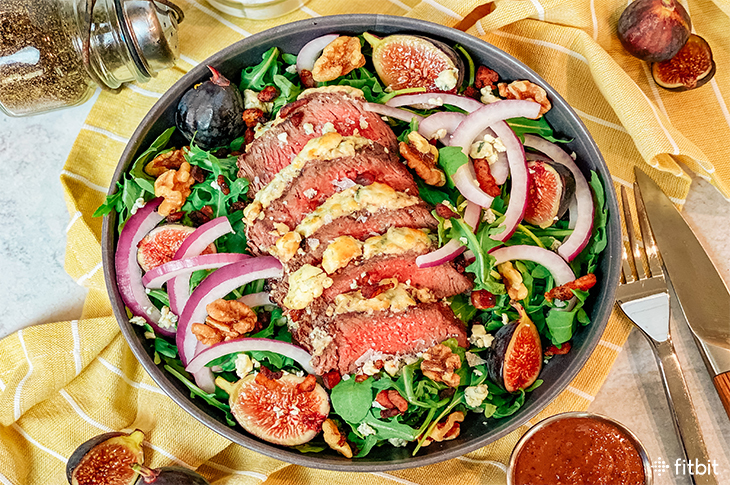
INGREDIENTS:

For the dressing:

1/3 cup balsamic vinegar

1/3 cup + 2 tablespoons extra-virgin olive oil

5 dried figs

1 tablespoon shallot, minced

1 teaspoon Dijon mustard

Water, to your liking, to thin out the dressing

For the salad: 

1⁄4 cup pancetta, diced

1 lb (500 g) sirloin steaks, fat removed or trimmed

Salt and freshly ground pepper

1⁄4 cup gorgonzola cheese crumbles

8 cups arugula

8 figs, halved or chopped

1 small red onion, peeled and julienne

1⁄4 cup walnuts

INSTRUCTIONS: 

Add the dressing ingredients to a blender and pulse until well combined. Add water to thin out the dressing to your liking. 

Cook diced pancetta until crunchy in a skillet over medium-high heat. Remove and set aside.

Heat grill or grill pan to medium-high heat. Season steaks with salt and pepper then cook, turning once, until medium rare or done to your liking. Once steaks are cool enough to touch, add the gorgonzola crumbles on top of the steaks and then place them under the broiler for 1 to 2 minutes until cheese is bubbly and lightly browned. Let rest and then slice thinly.

Divide remaining salad ingredients between bowls, add the gorgonzola crusted steak, and drizzle with fig balsamic dressing. Store remaining dressing in the fridge.

Makes four servings. 

NUTRITION FACTS (PER SERVING): 

Calories 430

Protein 32 g

Total fat 23 g

Saturated fat 5 g

Cholesterol 90 mg

Carbs 29 g

Fiber 5 g

Total sugars 22 g

Added sugars 0 g

Sodium 230 mg

Warm Brussels Sprout & Yam Salad with Maple Balsamic Dressing
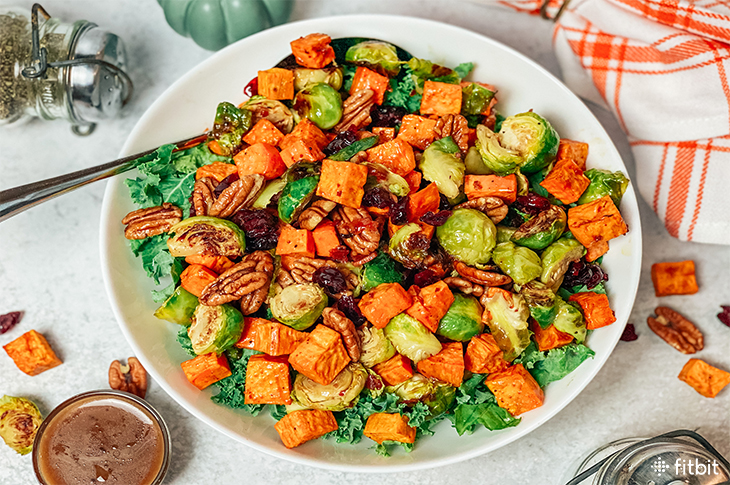
INGREDIENTS: 

For the salad: 

2 yams

2 tablespoons extra-virgin olive oil

Salt and freshly ground pepper

1 lb (500 g) Brussels sprouts

1 bunch of kale, stemmed and chopped

2 bacon slices

1⁄2 cup dried cranberries

1⁄2 cup pecans

For the dressing:

1⁄4 cup extra-virgin olive oil

2 tablespoons balsamic vinegar  

1 tablespoons pure maple syrup 

1 teaspoon Dijon mustard

INSTRUCTIONS: 

Preheat oven to 400°F (200°C). Lightly grease two separate baking sheets. Peel and chop the yams into even cubes, then drizzle with 1 tablespoon olive oil and sprinkle with salt and pepper. Place them onto one of the baking sheets. 

Stem and chop the Brussels sprouts while also removing any loose leaves. Drizzle with 1 tablespoon olive oil and sprinkle with salt and pepper. Place them on the other baking sheet.  Place both baking sheets into the oven to roast for 25 to 30 minutes or until tender.

Blanch kale in boiling water until tender, about 1 minute. Drain and shock in an ice bath, and then massage leaves for 1 minute. Remove from ice and pat dry.

Cook bacon in a skillet over medium-high heat until crispy, chop, and set aside. 

Add the dressing ingredients to a blender and pulse 4 to 5 times until well combined.

Place all cooked ingredients along with cranberries and pecans into a large mixing bowl and drizzle with maple balsamic dressing, tossing to coat all ingredients evenly. Divide between bowls and enjoy! 

Makes four servings.

NUTRITION FACTS (PER SERVING): 

Calories 510

Protein 9 g

Total fat 36 g

Saturated fat 6 g

Cholesterol 10 mg

Carbs 44 g

Fiber 9 g

Total sugars 21 g

Added sugars 11 g

Sodium 200 mg

Kale, Chicken, & Apple Salad with Cinnamon Apple Cider Vinaigrette
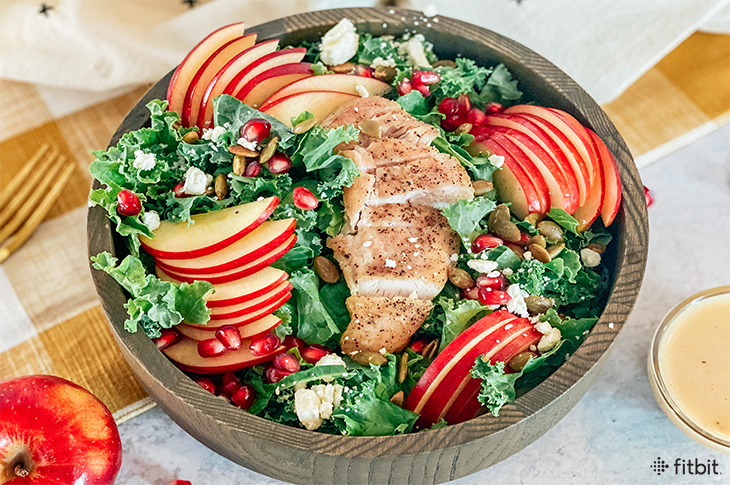
INGREDIENTS:

For the dressing:

1/3 cup extra-virgin olive oil

3 tablespoons apple cider vinegar

2 tablespoons honey

1 teaspoon Dijon mustard

1/8 teaspoon ground cinnamon

For the salad: 

1 lb (500 g) boneless, skinless chicken breasts

1 tablespoon extra-virgin olive oil

Salt and freshly ground pepper

1 bunch of kale, stemmed and chopped

1 medium apple, thinly sliced

1 pomegranate, seeded

1⁄4 cup goat cheese, crumbled

1⁄4 cup pepitas

INSTRUCTIONS: 

Place the dressing ingredients into a blender and pulse 4 to 5 times until well combined, set aside.

Heat a skillet over medium-high heat. Brush the chicken breast with olive oil and sprinkle with salt and pepper. Add chicken to the hot pan and cook for 5 to 6 minutes per side until cooked and no longer pink at the center. Rest for 10 minutes before slicing.

Divide the remaining salad ingredients between bowls, top with sliced chicken breast, and drizzle with dressing. 

Makes four servings. 

NUTRITION FACTS (PER SERVING): 

Calories 520

Protein 32 g

Total fat 31 g

Saturated fat 6 g

Cholesterol 90 mg

Carbs 32 g

Fiber 6 g

Total sugars 24 g

Added sugars 9 g

Sodium 130 mg

Beet & Citrus Salad with Orange Balsamic Vinaigrette
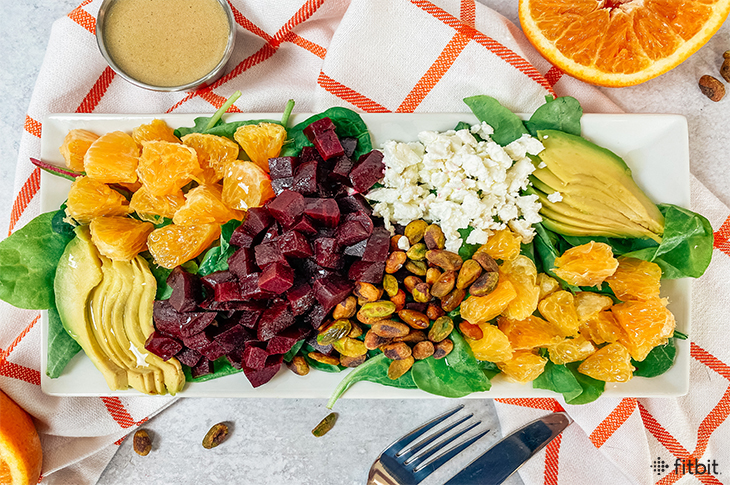
INGREDIENTS: 

For the dressing:

1/3 cup extra-virgin olive oil

Juice of 1 large orange (about ⅓ cup)

1 tablespoon balsamic vinegar

1 tablespoon honey

For the salad:

8 medium cooked beets, diced

2 oranges or mandarin oranges, peeled and sectioned

1 avocado, peeled and sliced

8 cups arugula, rinsed

1⁄4 cup goat cheese, crumbled

1⁄4 cup shelled pistachios

INSTRUCTIONS:

Place dressing ingredients into a blender and pulse 4 to 5 times until well combined. Set aside. Divide all the salad ingredients between bowls and drizzle with dressing. 

Makes four servings.

NUTRITION FACTS (PER SERVING): 

Calories 390

Protein 7 g

Total fat 29 g

Saturated fat 5 g

Cholesterol 10 mg

Carbs 32 g

Fiber 7 g

Total sugars 22 g

Added sugars 4 g

Sodium 350 mg

Powered by ESHA Nutrient Data, © 2020 ESHA Research, Inc.

The post Get a Taste of Fall With These Five Delicious Harvest Salads appeared first on Fitbit Blog.


source https://blog.fitbit.com/harvest-salads/

Tuesday, November 10, 2020

3 DIY Home Remedies to Supercharge Your Immune System

Whether you’re one of those people who seems to catch everything, or you just want to fend off a cold or the flu, your diet can make a big difference. Every day, your body relies on key nutrients to fortify its immune soldiers so they can quickly pounce on illness-causing intruders.

But in the real world, it can sometimes be tricky to get all the powerhouse nutrients we need to stay strong. If you’d like to (fingers crossed) stay off the couch and out of the doctor’s office, try whipping up these immune-enhancing drinks. They’re loaded with protective nutrition to bolster your defenses. And they take just minutes to make!

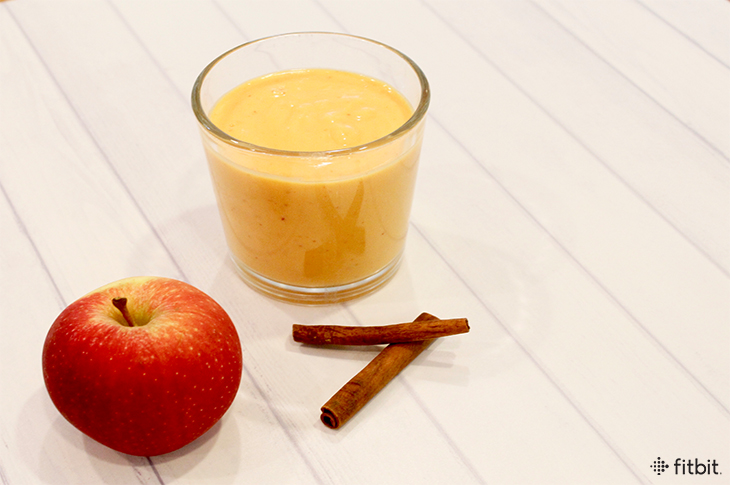
Maple Sweet Potato Smoothie

Your gut  is a huge immune organ, charged with filtering out viruses, bacteria, fungi, and more. Keep yours in top shape with this smoothie. Each glass delivers a cocktail of gut-fortifying nutrients. In addition to plenty of probiotics from kefir, you’ll also get a double dose of prebiotics from sweet potato and maple syrup. As a bonus, you’ll net more than a day’s worth of vitamin A, which is essential for healthy skin and cells lining your airways and gut, which are the body’s first line of defense against infection.

Make it. In a blender, blend ½ cup unsweetened kefir, ¼ cup low fat milk, ½ cup mashed sweet potato, ½ diced, cored apple, 1 teaspoon maple syrup, 2 ice cubes, and a dash of cinnamon until smooth.

Per serving: 280 calories, 2 g total fat, 1 g saturated fat, 10 mg cholesterol, 120 mg sodium, 58 g carbs, 6 g fiber, 34 g total sugars, 4 g added sugars, 9 g protein 

Lemony Ginger Turmeric Tea

Each year, upper respiratory tract infections (or URTIs) like the cold, flu, and viruses send 10 million Americans to the doctor. Now, a growing body of research finds that simple ingredients in this tea, like turmeric and ginger, might keep you from getting infected in the first place. And while honey won’t prevent a URTI, a new British Medical Journal study finds it’s more effective for cough relief than cough medicine, antihistamines, or painkillers.

Make it. In a small saucepan, combine 1 cup water, ¼-inch sliced ginger root, ¼-inch sliced turmeric root, and ¼ diced lemon. Bring to a boil. Lower heat and simmer for 5 to 10 minutes. Remove from heat and pour liquid through a strainer, discarding ginger, turmeric, and lemon. Stir in 2 teaspoons honey and 1 tablespoon lemon juice.

Per serving: 45 calories, 0 g total fat, 0 g saturated fat, 0 mg cholesterol, 0 mg sodium, 13 g carbs, 0 g fiber, 12 g total sugars, 11 g added sugars, 0 g protein 

Orange Kiwi Green Juice

You could love this elixir for its cold-busting vitamin C (nearly twice your daily dose). But that’s not the only reason to drink up. Each serving packs a full cup of spinach, which is chock full of antioxidants that keep immune cells strong and healthy. Leafy green spinach is so powerful that its extract has been shown to protect against harmful bacteria like E. coli and S. aureus.

Make it. In a blender, puree 1 peeled kiwi, ¼ English cucumber (it’s less bitter than traditional cukes), 1 cup baby spinach, ¼ cup parsley sprigs, ½ cup 100 percent orange juice, and 1 pinch cayenne pepper until liquified. Serve as is (you’ll rack up 4 grams of filling fiber). Or, if you prefer pulp-free juice, pour through a strainer or cheesecloth.

Per serving (including pulp): 120 calories, 1 g total fat, 0 g saturated fat, 0 mg cholesterol, 30 mg sodium, 26 g carbs, 4 g fiber, 18 g total sugars, 0 g added sugars, 3 g protein 

The post 3 DIY Home Remedies to Supercharge Your Immune System appeared first on Fitbit Blog.


source https://blog.fitbit.com/diy-home-remedies/

Monday, November 9, 2020

How Meditation Can Strengthen Immune Function

When you meditate, you’re taking the time to stop, breathe, and ground yourself in the present moment—which can have serious health benefits, including for your immune system.

“Meditation is a mindful practice that allows us to be in the present. When we focus too much on the past, we are more susceptible to depressive experiences—and when we focus too much on the future, anxious feelings are likely to arise,” says Dr. Catherine Jackson, licensed clinical psychologist and board-certified neurotherapist at Optimal Neuroholistic Services. “Meditation allows us to train our brains to focus more and more on the present—and, by doing so, reduce stressors that negatively impact the immune system.”

But how, exactly, does meditation help support healthy immune function?

Meditation helps reduce levels of cortisol—also known as the “stress hormone”

One of the biggest ways meditation can help boost your immune system is by lowering cortisol—also known as the stress hormone.

“Too much stress leads to the body producing too much cortisol—and when the body experiences stress for too long it becomes chronic, leading to an overactive production of cortisol which results in inflammation,” says Jackson.

“When people are chronically stressed, their cortisol levels are high and this can put their immune functioning at risk,” says Nicole Avena, PhD, Assistant Professor of Neuroscience at Mount Sinai School of Medicine and Visiting Professor of Health Psychology at Princeton University. “Meditation can help people to relax and reduce anxiety, which can reduce cortisol levels…[and] can help to improve our immune response.”

Meditation can help your body move from “fight or flight” to “rest and digest”

Meditation can also help shift the body from the sympathetic nervous system—also known as “fight or flight” mode—to the parasympathetic nervous system. “Meditation induces the parasympathetic system, which is the ‘rest and digest’ system,” says physician and lifestyle medicine coach Kathy Tsapos Parmele, MD. “It induces a wide variety of biochemical changes by decreasing the gene expression of proteins related to inflammation and improving the expression of genes related to immune response.”

When your body is in rest or digest mode, you’ll also feel more calm—which, in turn, can help reduce stress and provide additional benefits to your immune system.

“Physiologic changes include decreases in oxygen consumption, blood pressure, heart rate, and respiratory rate,” says Tsapos Parmele. “These salutary effects impact the entire organism in that they reduce the inflammatory stress cascade that leads to immune dysfunction.”

Meditation has been shown to positively affect gut health—which supports healthy immune function

The digestive system plays a large role in immunity. The ways meditation impacts the body (for example, by lowering stress hormones) can help support a healthy gut—which, in turn, can support a healthy immune system.

“Decreased stress responses improve gut function through the GI-neuronal axis. A large part of our immune system lives in the gut as part of GALT (gut-associated lymphoid tissue),” says Tsapos Parmele. “Meditation decreases sympathetic nervous system activation, which in turn reduces cortisol and norepinephrine release, decreases intestinal permeability—[also known as] leaky gut—and reduces inappropriate activation of the immune system that otherwise leads to autoimmune disorders.”

How often do you have to meditate to experience the immune-strengthening effects?

Clearly, carving out time to meditate can have a huge impact on your body’s immune response. But how often do you have to meditate in order to enjoy those immune-boosting effects? “The key is to reduce stress, and just one meditation session can have a ripple effect of calming you, which can help reduce your current state of stress,” says Avena.

While one session can be all it takes to start driving immunity-boosting effects from your meditation practice, “the more you meditate, the better the response,” says Tsapos Parmele. “In our central nervous system, practicing any new activity results in neuroplasticity—growth of new neural connections that tie together and become more robust the more often you practice. In the same way, the more you meditate, the more those neural connections tie together and are able to more quickly achieve a parasympathetic state, leading to improved immune function and decreased inflammation.”

Just make sure not to get carried away; the important thing is that you actually start meditating—not that you meditate every day or create a “perfect” practice. “Many of us get really excited to start and take on too much too fast. Or we get overwhelmed or intimidated at the thought of meditating, especially if it’s new,” says Jackson. “Start with what’s comfortable for you and ditch the need to feel like you have to do it perfectly. Should your mind wander, gently bring your attention back to the focus of your meditation when you notice you’ve drifted off. The more you practice this, the better you will become with it and the more benefits you will reap.”

The post How Meditation Can Strengthen Immune Function appeared first on Fitbit Blog.


source https://blog.fitbit.com/meditation-support-immune-function/

Friday, November 6, 2020

How to Strengthen Your Immune System Naturally

With cold and flu season looming, and with COVID-19 still a threat, you may be placing more of an emphasis than usual on staying healthy this fall and winter. Fortunately, there are a number of things which you can do to help boost your immune system naturally, which may help your body fight off harmful pathogens.

Try adding any, or all, of these lifestyle changes to your daily routine:

Eating a more plant-based diet. A diet that’s rich in whole foods—including fruits and vegetables, whole grains, nuts, and legumes—will provide you with more vitamins and nutrients than one filled with processed foods.

“A plant-based diet can help with reducing inflammatory state in the body and, thus, can help strengthen the immune system,” says Natasha Fuksina, MD, a board-certified internal medicine specialist based in Newark, New Jersey. “Green, leafy vegetables provide antioxidants, which help fight inflammation. Eating a sufficient amount of fruits and vegetables will provide the body with carotenoids, which protect against oxidative damage and help T cells—part of the immune system—as well as flavonoids, which have antiviral properties and stimulate T-cells.” This doesn’t mean you have to go entirely plant-based, but adding more fruits and veggies into your diet certainly won’t go amiss. 

Keeping your gut healthy. In recent years, researchers have realized that intestinal health influences immune function. You may change the composition of your gut bacteria by consuming probiotics. “Taking probiotics with high amounts of various species of good bacteria can help boost immune function by populating healthy bacteria in the gut,” Fuksina says. “Good bacteria help promote the strengthening of the intestinal barrier, which protects the body against harmful microbes.”

Fermented foods like sauerkraut, kimchi, and pickles may be rich in probiotics, as well as cultured or fermented dairy products like yogurt, buttermilk, and kefir. Look for “Lactobacillus acidophilus” or “Bifidobacterium bifidum” on food labels.

Lowering your stress levels. Research shows that experiencing too much stress may make you susceptible to illness. Reducing the amount of stress in your life may have a positive impact on your immune system. “Try finding a few ways to focus your mind, or do an activity that helps to relieve stress when you notice the stress level is increasing,” says Caryn Campanelli, a certified personal trainer based in Berlin, New Jersey. “Reducing stress can be through a variety of self-care activities, from physical exercise, yoga, massage, mindfulness exercises—such as breathing exercises and meditation—and identifying sources of stress and ways to reduce the sources [or] ways to change one’s personal reaction to the source.”

Spending time in nature. Spending time in green spaces has been shown to strengthen immunity. “Letting our kids play in nature strengthens their immune system,” says Karina Krepp, a New York City-based certified personal trainer.  

Some people go one step further when they’re in nature, going barefoot to feel the earth beneath their feet. This practice, called grounding, has been shown to help reduce inflammation, which may keep the immune system functioning optimally. The practice may also help you reduce your stress levels. “Walking on the earth with your shoes off is an easy way to reduce our experience of pain and anxiety, improving our mood,” Krepp says.

Staying hydrated. Some research shows that dehydration may cause oxidative stress, which triggers inflammation, causing the immune system to respond. Drinking enough water throughout the day may counteract this process. Staying well-hydrated also helps your body rid itself of bacteria, toxins, and other waste while transporting nutrients through the bloodstream.

“If you are dehydrated, your bloodstream slows… so it is harder to transport nutrients where they need to go,” says Kristin Foust, a nutrition coach and certified personal trainer based in Denver. “The more toxins and bacteria in your body that can’t be flushed out, the weaker your immune system is, because it’s fighting so many things at once.”

To stay well-hydrated, drink “half your body weight, in pounds, in ounces of water a day,” Foust says. “Drinks like tea and sparkling water count towards this.”

Exercising outside. Getting regular physical activity has been shown to strengthen your immune system and lower your risk of illness and chronic disease. “Those that perform regular exercise have a lower risk for many pathologies—that is, heart disease, diabetes, some cancers,” says Rick Richey, a New York City-based certified personal trainer. “It can also bolster your immune system, making exercisers more resilient against the symptoms of seasonal sicknesses.”

Taking your workout outdoors may strengthen your immune system further, because exposing yourself to sunlight helps your skin make vitamin D. “Adequate amounts of vitamin D is extremely important in the proper function of the immune system,” Fuksina says. “Several recent studies demonstrated a link between low vitamin D levels and poor responses to SARS-CoV-2 [the virus that causes COVID-19].”

Getting enough rest. Sleep helps your body recharge. Research shows that when you don’t get enough rest, your immune system isn’t as effective at fighting illness. “[Get] adequate sleep—at least 7 ½ hours per night,” Fuksina says.

If you get into bed at a reasonable hour and still have trouble falling asleep, blue light exposure may be the culprit. The blue light that smartphones, tablets, and laptops emit prevents you from producing melatonin, a hormone which makes you sleepy as bedtime nears. If you typically look at your devices all evening, stop an hour or two before bedtime; you may notice a difference.

Washing your hands regularly. Viruses and bacteria often enter your system when you touch your eyes, nose, or mouth with dirty hands. Give your immune system fewer bugs to fight off by cleaning your hands often. Wash with soap and water before and after eating or preparing food, before and after using the bathroom, after blowing your nose, when you’ve touched shared surfaces and whenever your hands appear soiled.

The post How to Strengthen Your Immune System Naturally appeared first on Fitbit Blog.


source https://blog.fitbit.com/strengthen-immune-system-naturally/

Wednesday, November 4, 2020

Habits that Wreak Havoc on Your Immune System—and What to Do Instead

In a perfect world, we’d all make healthy choices all the time. But we don’t live in a perfect world—and for many of us, our habits don’t always contribute to our health. In fact, many of our habits can actually harm our health—and, more specifically, wreak havoc on our immune system. And while supporting immune function is always important, it’s especially important now.

So, the question is, what are some of the habits we’re partaking in every day that are having a negative impact on our immune systems—and what should we do instead to support our immune function and make healthier choices?

The Habit that Wreaks Havoc: Eating in Front of the TV 

Are you the kind of person who, in an effort to multitask, eats their meals in front of the TV while they catch up on the day’s news? If so, you may want to rethink your dining habits.

There are a lot of stressful things going on in the world—and consuming that stress while you consume your meal isn’t doing your immune system (or your digestive system) any favors. “So many people have the TV or other media on in the background while they are eating, much of which creates stress,” says Functional Medicine Certified Health Coach Jane Hogan. “This keeps the autonomic nervous system in a state of fight-or-flight—hampering digestion and deactivating the immune system.”

What to do instead: Practice mindful eating. Take the time to enjoy your meal mindfully. Turn off the TV, sit at the table, and be present while you eat your food. Practicing mindfulness has been shown to lower stress—which, over time, can help support a healthy immune system, get better sleep, help make progress toward your weight goals, and more

The Habit that Wreaks Havoc: Not Getting Enough Exercise

Exercise is hugely important to support a healthy immune function—but many of us aren’t getting our workouts in on a consistent enough basis. “Most of us do not get enough exercise,” says Maria N. Vila, DO, a board-certified physician and medical advisor for eMediHealth. And especially during the pandemic, many of us are moving less; but that doesn’t mean we should beat ourselves up over it. 

What to do instead: Make exercise a priority. If you want to support healthy immune function, try to make exercise a habit. How you exercise is up to you; you can lace up your shoes for a run, hit your mat for a yoga session, or do some bodyweight exercises in your backyard—just make sure you’re working enough workouts into your schedule to support your health and immune function. “The recommended amount of exercise [from the American Heart Association]…is 150 minutes of moderate-intensity exercise weekly or 75 minutes of vigorous activity weekly,” says Vila. That means a 25-minute jog three times a week. Or, if you’re not into running, you can take a 20-minute “sanity walk” around the block seven times a day.

The Habit that Wreaks Havoc: Getting Your Sweat On Even When You’re Not Feeling Well

Exercising regularly is a must for supporting optimal immune function—but the opposite can be true when you’re feeling under the weather. “One of the worst things I see people do is working out while they’re unwell,” says Brendan Lee, coach, Ironman triathlete, and editor at The Fit Brit. “Often we consider it some kind of victory if we get to the gym even if we’re not feeling well, but exercise is the last thing your immune system wants [when you’re sick].

When you’re sick, your body needs energy to fight the illness. But if you spend your energy going for a run or doing a HIIT workout on YouTube, your body is going to have less energy to combat the illness—and it’s going to be harder to recover.

What to do instead: Rest! If you’re feeling under the weather, give your body the time it needs to heal. “Illness is your body telling you to rest,” says Lee. “Make sure you listen!”

The Habit that Wreaks Havoc: Scrolling through Social Media Before Bed

Getting proper sleep plays a huge role in immune function. But if you’re spending the hours before bed scrolling through social media on your phone or watching videos on your laptop, you’re not going to be able to catch the Zzz’s you need for your immune system to function at a high level.

“The blue light emanating from screens tricks the brain into thinking it’s still daytime, messing with the natural circadian rhythm, hampering the production of melatonin and ultimately adversely affecting sleep,” says Hogan. “Without sufficient sleep, the body makes fewer cytokines, a type of protein that targets infection and inflammation, effectively creating an immune response.”

What to do instead: Ban screens from the bedroom. If you don’t want screens to mess with your sleep schedule, plan to turn them off at least an hour before bedtime—and if you don’t want to be tempted (“just one more email!”), try banning electronic devices from your bedroom altogether.

The Habit that Wreaks Havoc: Taking “Shortcuts” for Your Health (While Ignoring Your Diet)

There’s nothing wrong with taking vitamins or supplements to support your immune system. But if you’re taking that vitamin or supplement as a kind of “shortcut” to compensate for a less-than-ideal diet, you’re not going to get the immunity-boosting benefits you’re looking for.

“You can’t out-supplement a poor diet,” says Laura DeCesaris, DC, MSACN, IFMCP, and founder of Heartroot Health and Wellness. “If you’re eating the Standard American diet—which is generally full of inflammatory processed foods, added sugar, and way too many unhealthy fats and carbohydrates—taking an ‘immune-boosting’ supplement without first improving your regimen will generally not be helpful.”

What to do instead: Eat foods that support your immune system. “Focus on a balanced, anti-inflammatory eating style, rich in whole foods and low in processed junk food,” says DeCesaris.

Incorporate nutrient-dense, immunity-supporting foods (including fruits, veggies, and healthy fats) into every meal—and swap out your processed snacks for healthier options, like almonds or blueberries.

If you’ve struggled to adopt a healthier diet in the past, no worries! Just take things one step at a time. 

“The best way to adopt a newer diet regimen is to start small but plan big,” Dr. Tina Gupta, co-founder of health and wellness website The Lifestyle Cure. “Try reducing the number of processed goods that you eat and slowly start to replace them with nutrient-dense food like vegetables and fruits. The nutrients within these substances will naturally enhance the immune system and provide you with the protection that you need.”

The post Habits that Wreak Havoc on Your Immune System—and What to Do Instead appeared first on Fitbit Blog.


source https://blog.fitbit.com/habits-immune-system/

Tuesday, November 3, 2020

Debunking the Flu Shot

When flu season rolls around, do you make it a priority to go for a flu shot? The Centers for Disease Control and Prevention (CDC) recommend that all adults should get vaccinated annually, but only 52 percent of American adults actually received flu shots during the 2019-20 flu season.

Some people who don’t receive flu shots may mean to get vaccinated, then forget, but others purposely bypass it for any number of reasons. “There are many factors that contribute to the low flu vaccine rate,” says Amesh Adalja, MD, senior scholar with the Johns Hopkins Center for Health Security and a fellow of the Infectious Diseases Society of America. “Some people have misconceptions about getting the flu from the flu vaccine. Others believe it is ineffective. And still others minimize the risk of influenza.”

Every year, a certain number of people choose not to get vaccinated. “In my experience, there are several comments about declining the flu shot—that is, ‘I don’t get the flu, so I don’t need the shot,’ or ‘I had it once and it made me sick; never again,’ or ‘I read somewhere that the chemicals in the flu shot are extremely harmful,’” says Catherine Fisher, CRNP, a certified nurse practitioner with Mercy Family Care in Baltimore, who says that a conversation between a patient and healthcare provider may help to change someone’s mind about flu shots. “The key to all of this [is] not only giving information to patients, but also having the time and the willingness to answer questions that arise.”

Flu shot myths, debunked

Some people are wary of vaccinations of any type and may not like the idea of getting one annually. But immunity to the influenza virus wears off over time, so a yearly injection before the height of flu season helps to protect against illness or worse; about 22,000 Americans died of complications from the flu during the 2019-20 flu season.

Annual flu shots also help prevent disease because they can be changed to protect against strains of flu which are expected to be most rampant during each flu season, since different strains of the flu may circulate every year.

Sometimes people become infected with strains of the flu that weren’t targeted by the flu shot, but having had the vaccination still offers protection, leading to milder illness. “Even if the flu vaccine doesn’t protect them from becoming infected with influenza, it may protect them from becoming hospitalized with influenza,” Adalja says.

Vaccines typically contain inactivated influenza and don’t cause the flu, despite some opinions which have been shared via social media. However, they may cause mild symptoms. “Individuals do have reactions, producing symptoms like low-grade fever or mild fatigue,” Fisher says. “This response is a healthy reaction to the virus, indicating that the immune system has been activated and that your body recognizes an invading virus.”

Where to get a flu shot

Flu shots are available at doctor’s offices, pharmacies, walk-in clinics, and certain workplaces (although this may be less likely during the pandemic). The variety of venues offering protection against the flu should make it easier for you to fit a vaccination into your schedule.

Pharmacy-administered flu shots are often given on a walk-in basis, which may be more convenient for spontaneous people than waiting for doctor’s appointments. Some research shows that when people get their flu shots at nontraditional destinations like pharmacies, they’re more likely to get vaccinated before the end of October, which protects them for more of flu season.

“I think the pharmacies are a critical way of getting the flu vaccine into peoples’ arms,” Adalja says. Getting a flu shot at the doctor’s office will help your doctor keep your vaccination records updated, and you may have more time to ask questions or air concerns.

“I am not suggesting that education isn’t the role of pharmacist,” Fisher says, “but [doctors and other healthcare providers] are more likely to have an established care relationship with the patient, leading to ease of communication.”

Why you should get a flu shot during the pandemic

Getting a flu shot during the pandemic is as important, if not more important, than in years past, according to health experts. Because COVID-19 and the flu have many similar symptoms, lowering your chances of getting the flu may help you avoid the need for a COVID-19 test or quarantining at home. 

A flu shot could also help lower your chances of becoming ill with the flu and COVID-19 simultaneously, which may lead to serious illness. As a result of getting the shot, you may also avoid flu complications, which should keep you out of the hospital—where you might be exposed to COVID-19—at a time when COVID-19 cases are expected to rise. “Influenza [and] the novel coronavirus will be competing for the same hospital beds, ICU beds, and personal protective equipment,” Adalja says. “The less of a burden we can make influenza, the more room we’ll have to take care of coronavirus patients.”

The post Debunking the Flu Shot appeared first on Fitbit Blog.


source https://blog.fitbit.com/debunking-flu-shot/

Let’s Focus on Strengthening Our Immunity

As we enter November, our eighth month of living in a global pandemic, it’s clearer than ever that many of our collective priorities have changed. It’s been a challenging year, mentally and physically. Despite an increased focus on prioritizing “wellness”, many people feel worse about their overall health and well-being, with stress and anxiety levels at recorded all-time highs. 

That said, we’re pretty inspired by how you, our Fitbit community, have learned to adapt to the challenges of these unprecedented times. We know from the latest Fitbit data—and our continuing series of data stories on the blog—that users have embraced new kinds of physical activities to balance out a more sedentary WFH lifestyle. 

Of course, improving your health isn’t just about the physical. In our Stress Week series last month, we helped you learn more about mindfulness, stress management, and more—through content that focused on all things mental health. But did you know that meditation and mindfulness can also help improve immune function? 

This month, we are talking about immunity strengthening and support. That means we’ll be exploring everything from DIY home remedies to unexpected ways you could be wreaking havoc on your immune system—and, of course, what to do instead. We’ll be debunking common misconceptions about the flu shot, bringing you plenty of delicious and healthy recipes (as always), and more. It’s always been our mission to help people around the world get healthier, and now more than ever, we want to support you in staying healthy and strong, both mentally and physically. 

Happy reading!

The post Let’s Focus on Strengthening Our Immunity appeared first on Fitbit Blog.


source https://blog.fitbit.com/november-immunity-month/