Tuesday, July 21, 2020

4 Ways to Transform Your Relationship With Food

Every five years, we get a new set of USDA dietary guidelines. The guidelines are developed by experts and outline scientifically validated nutrition and dietary information for the US population. The last set of guidelines arrived in 2015, which means the next set is slated to arrive later this year.

We were curious to hear what dietitians have observed about the future of eating and overall wellness. Where is culture shifting, and what new ideas are becoming internalized within the nutrition community? This is what four experts had to say about what we should see more of in the years to come:

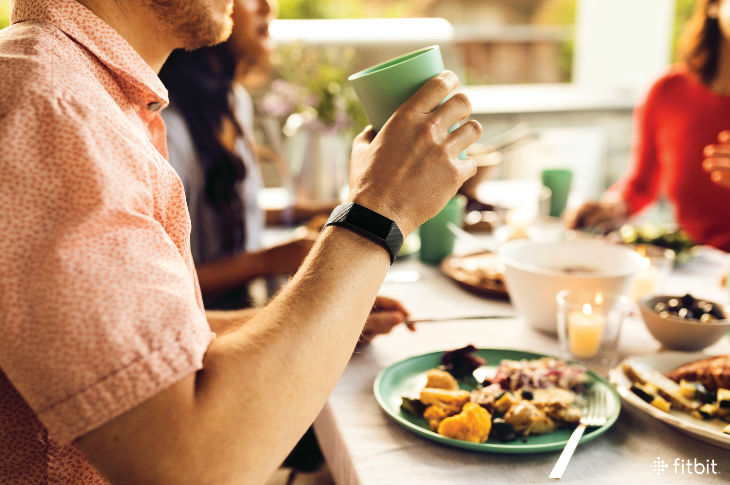
Mindful and intuitive eating is now taking center stage. More experts want you to focus on the process of eating and truly enjoy your food. “Start by ‘setting the mood,’” says Megan Wong, RD. “Try and limit distractions, putting away any screens and devices. Play background music if it helps, and make your dining area an enjoyable, relaxing place to be.” Wong says mindfulness is different for everyone. “For some, it’s thinking about where your food came from and how it got to your plate,” she says. “For others, it means eating more slowly, paying more attention to the textures, aromas, and tastes of what you’re eating and how you feel.” 

Thinking about how food tastes and why we eat can help us develop a healthier relationship with food in general. This goes hand-in-hand with intuitive eating, which Bonnie Roney, RD, a registered dietitian and Food Freedom coach, says is letting your body’s “inner wisdom, hunger and fullness cues guide” decide when you eat and what you eat. “Those who eat intuitively have been found to have less disordered eating, improved body image, decreased weight cycling and lower BMI,” she says. The lessons? Eat slowly, enjoy each taste, listen to your body when it says it’s full, and don’t deprive yourself.

Carbs get the fat treatment. There was a massive fear of fat back in the 1990s. This is when the low-fat phenomenon swept through the country, and everyone was following high-protein, low-fat diets to turn themselves into so-called “beacons of health.” Today, we understand there are healthy and unhealthy fats. Monounsaturated and polyunsaturated fats—like the fats in avocado, nuts, olive oil, and fish—are superfoods. Saturated fats—like those found in processed foods, cheese, butter, coconut oil, and red meat—should be limited in the diet. 

Today, we understand the nuance. And today, carbs are getting similar treatment, says Amy Goodson, MS, RD, CSSD, a dietician and board-certified specialist in sports dietetics. “The conversation is shifting from carbohydrates as a macronutrient to limit, to a conversation about which are more nutrient-rich than others,” she says.

Just like the categorization of fats, there is now recognition that there are healthy carbs and less healthy carbs—and what should be considered healthy vs. unhealthy may not be surprising to most people,” she says. Nutrient-rich carbs are whole grains, legumes, vegetables, and fruit. Refined carbs should be limited, like white bread, pastries, candy, and sugar-sweetened beverages.

All foods have a place on your plate. There’s room for all foods in your diet, even an occasional slice of cake after dinner or a rich pasta dish once in a while. “Carbs and gluten aren’t evil,” says Kathryn Bubeck, RD, a dietitian in Greensboro, North Carolina, and expert for InvigorMedical.com. “Some people feel better on a low-carb plan, some of us prefer high-carb. Unless you have celiac disease, there is absolutely no reason to eliminate gluten from your diet. To take this one step further, I wish people would stop eliminating entire food groups unless they have an actual medical reason to do so.”

Bubeck says the idea that some foods must be totally banned is “terribly outdated,” and there are really no “bad” foods. “Unless you’re literally eating expired, dirty, or rancid food, everything has some type of nutritional value,” she explains. “Villainizing certain foods can lead to disordered eating, and this can be a very hard cycle to break.” Enjoy it—the ice cream, the bread, the chips. Just don’t over-consume it.

Focus on your behavior, not just your weight. For so long, everyone looked at weight as a measure of health. But body mass index (BMI) is only one measurement, and it’s not an entirely accurate predictor of someone’s overall wellness, says Roney. 

“Nutrition experts are continuing to learn how behaviors, not weight, are the best predictors of health,” she says. “Weight is not a behavior, and many registered dietitians are shifting from weight-focused to behavior-focused practices with patients and clients to improve health markers such as lowered waist circumference, blood pressure, or cholesterol.” Sure, weight loss will most certainly help to reduce these numbers, but you can achieve improvements by focusing on the behaviors or habits that caused the numbers to go up, not just weight.

It is more important that you eat a healthy, balanced diet versus falling inside a narrow BMI. Believe it or not, scientists have found other numbers that have nothing to do with weight—like the speed a person walks, or the intensity of their grip—can be predictive of a person’s overall health. 

The post 4 Ways to Transform Your Relationship With Food appeared first on Fitbit Blog.


source https://blog.fitbit.com/transform-relationship-with-food/

How to Mentally Approach Outdoor Summer Workouts

Summer days are made for being outdoors—as safely as we can. On top of providing some vitamin D, spending time in nature boosts our mood and can help reduce stress. At the same time, the idea of an outdoor summer workout can be a little intimidating. The additional heat and humidity pose challenges.

Beyond the basic advice to wear sunscreen, stay hydrated, work out earlier in the day, wear light colors, and stay in the shade when you can, it’s also helpful to adjust your mindset before doing outdoor summer workouts. You may have heard “don’t push it” or “give yourself a break.” But that’s all easier said than done. So we asked Dave Caldwell, head coach of Whisper Running, how to actually achieve these goals so you stay safe and continue to love exercising.

Tip: Don’t push it

Make it happen: Check your heart rate

“If you are just starting out, be sure you are eating sufficiently, staying hydrated, and starting off gradually,” Caldwell says. Otherwise, exhaustion may force you to sideline yourself. Then, whatever your fitness level, monitor your heart rate to check that you don’t push too hard during your workouts. Your Fitbit device can help you stay in the right zone while you exercise with Active Zone Minutes. The on-wrist alerts will let you know when you’re pushing too hard and need to slow down.

Keep in mind that if you’re running or doing HIIT training, your heart may intermittently reach these high levels but it should not stay there for a long time, otherwise you risk a quick burnout and prolonged soreness.

Tip: Don’t expect a PR

Make it happen: Rethink the definition of “PR”

Tough conditions make it tough to break any records. While it’s natural to seek improvement, when it comes to exercise plans, “fall months should look different than spring, and summer different from winter,” Caldwell says. So consider setting different goals for each season, allowing for a good degree of variance among these. 

And remember that what you do now—including embracing the fact that the elements are taxing your body—will help you reach your long-term goals. “New athletes may be lucky enough to PR several times in a single season, but seasoned athletes—ones who understand the value and principles of training—will be patient yet persistent in their pursuits, preparing for the ideal time to hit their peak,” Caldwell adds.

Make sure not to beat yourself up—it’s natural to see a change in your performance on hotter, humid days, so try to be flexible. Instead, check in with yourself mid-workout. “You must respect the environmental conditions,” says Caldwell, who notes that signage at the 2012 Boston Marathon—where a heatwave elevated temperatures by as much as 25 degrees so that it reached into the 90s on race day—read “Reevaluate your goals.” 

Tip: Give yourself a break

Make it happen: Think big picture

The idea of slowing down during a workout or taking an entire day off is foreign to some exercisers. But “life presents many stresses, especially lately, and we must respect those stresses by adapting through changes in the exercise workload. This means continuing a regular pattern of exercise while temporarily decreasing the intensity of the workouts,” Caldwell says. “Whether it’s a break in the middle of a workout, or a break spanning a few days, both bring great value for the long-haul.”

So if you struggle to acknowledge that it truly is too hot to workout outside or to reduce your intensity mid-circuit, remember your big-picture goal. Hitting it too hard today and ignoring your body’s signals that it needs a break isn’t worth possibly giving yourself heat exhaustion and being forced to take at least a day—if not several—off. 

The post How to Mentally Approach Outdoor Summer Workouts appeared first on Fitbit Blog.


source https://blog.fitbit.com/mental-approach-summer-workouts/

We’d Love to Quarantine With Ayesha Curry: Here’s Why

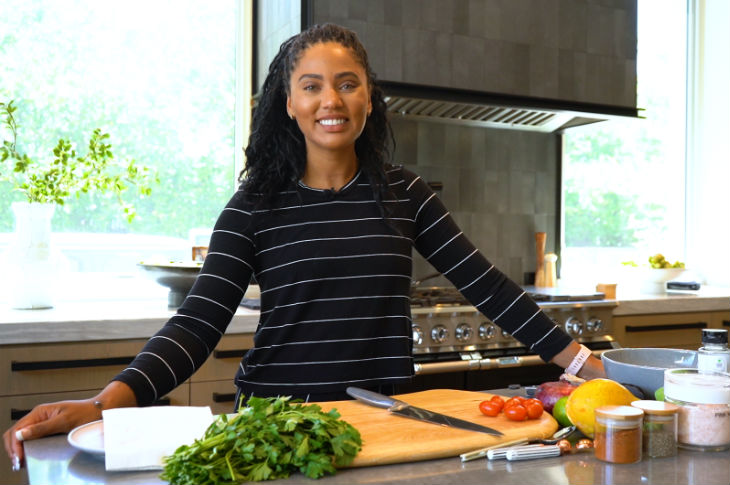
Ayesha Curry’s Premium Summer is in full swing—and we’ve absolutely loved tuning into her series on Fitbit Premium so far. Whether you’re seeking a new workout regimen or looking to spice things up in your kitchen now that we’re all cooking at home more often, there’s something for everyone in this series. 

Haven’t gotten the chance to check it out yet? You’ll want to ASAP

During a time when things are so uncertain, Ayesha’s focus has been on staying present as much as possible, as well as keeping on track when it comes to her health and wellness journey. She also recently launched her own lifestyle magazine, Sweet July, the first issue of which includes a whopping 22 recipes, Ayesha’s guidance on finding gratitude in every day (especially now), feeling peace through time spent safely with family and friends, and more. 

One thing is for sure, we’d love to quarantine with Ayesha. Keep reading to find out why. 

FITBIT: How have you been keeping fit during quarantine?

AC: I’ve been doing the opposite of what a lot of people have been doing while sheltering-in-place. I’m constantly on the road for work, which is a huge disruption to healthy eating or fitness habits. Being home has afforded me the opportunity to hit the reset button on that, and I’ve been taking full advantage. 

FITBIT: Talk about motivational. So, can you tell us what a “day in the life” looks like right now when it comes to your nutrition and fitness routine? 

AC: It’s a mish-mash of things. Typically, I’ll start with a bulletproof coffee with Ghee and coconut oil, blended. I try to drink 32 ounces of water before noon with cucumbers and lemon; a protein shake and bar, then I’ll work out if I haven’t already. 

For lunch, I’ll have an avocado or make a robust salad with either shaved Brussels sprouts or kale for extra nutrients and a protein like chicken or salmon. I’ll either drizzle lime and honey or homemade dressing made with maple syrup, lemon, and EVOO. For a salad like the papaya salmon one I created for Premium Summer, it’s so flavorful, I don’t need a ton of additional dressing.

For snacks, I usually stick with nuts, banana chips, and dried mango slices. I also like jicama—that crunch!—carrots and hummus, crispy chickpeas (love the ranch flavor), and kale chips. If I’m eating dessert, I love cereal; or I’ll have late night fruit—the fam and I are super into mangoes, white peaches, and apples.

I’ll have one “cheat day” a week so I don’t go crazy. Actually, I look forward to it all week long—it’s the best day ever! Usually Sundays, but lately it’s turned into Saturday. I’ll spend all day preparing, shopping, and planning it out. Usually, I’ll pick a theme or a cuisine to plan it around. I recently made an Indian-themed meal: butter chicken, tikka masala, and paratha. I’ve also done a Greek night and recreated some menu items from one of my favorite San Francisco restaurants, Kokkari.  I’m a wine person—I drink Cabs—and chocolate is my go-to food to indulge in. 

I’m really into portion control over any kind of diet, and try to stick to nourishing, delicious food in moderation. I keep track of the food I’m putting into my body through the Fitbit app on my phone, and the calories toward my daily goal are at a glance on my watch. 

FITBIT: How do you stay motivated to stay healthy? 

AC: I started my fitness journey because I wanted to be strong and healthy for myself and the people who depend on me. But it was important that I did it my way, which meant I needed working out to fit in my life, NOT take me away from it. I hate the term balance, because I don’t think there’s any formula that works for everyone, but I do believe that creating time for yourself to exercise is never time wasted. 

My worst habit (that has been a constant battle) is not getting enough sleep. Sleep is so important to your mental and physical health, but when life gets busy or stressful, I get a touch of insomnia. It’s definitely something I’m conscious of and working towards improving.

FITBIT: How do you keep meals exciting during COVID-19 times? 

AC: Despite the fact that we’re all home, we’re all still very busy. So we make mealtime our family time to connect. Usually I’ll put on a good playlist for the kids, pour some wine or mix up a cocktail for Stephen and I, and just try to make the most of this time together. Keeping mealtime exciting is really all about variety, so I have my staple dinners I’ll always lean on, but also try my best to occasionally mix in a few new proteins or cuisines to keep things interesting. 

I’m about to release my new cookbook The Full Plate in September, so it’s been really fun to make the new recipes from the book for the family. The kids have been loving them which makes my heart very full.

FITBIT: What’s a favorite weeknight meal? 

AC: Chicken Parm is a family favorite—it’s comforting. It’s a fairly basic dish, but it’s also one of the first things I made for Stephen when we were dating, so it’s nostalgic. I do a lighter breading using panko instead of regular bread crumbs, and whip up a super fast and fresh tomato sauce for the topping. 

We’re a “green veggies” family—we love Brussels, asparagus, and broccoli. I like to roast them on high heat to give everything a nice char and enhance the flavor of the veg. There’s nothing I love more than a one-pot or one sheet pan dinner, so most nights I’ll season up a protein and roast it alongside the vegetables. Easy, tasty, and (my favorite part) no dishes to clean up after! Since I’ve been trying to eat healthier, I’ll usually make dinner two ways with a slight modification for myself. It might be rice for the kids and a lettuce wrap for me, or simply subbing in a gluten-free pasta for traditional noodles. Little, easy swaps help me stay on track. 

My heritage is Jamaican and it’s my go-to cuisine, but my mom and grandma don’t really have documented recipes. It’s a pinch of this, a dash of that; so I’ll make dishes from memory. I’ve been making Jamaican food a lot to feel connected to my grandma, who lives in Canada, and whom I haven’t seen in MONTHS due to COVID-19. We FaceTime and share the bond over family-favorite meals.  

FITBIT: What kind of activities have you and the family been doing to stay active together? 

AC: Stephen and I have been riding bikes outside together which has been really nice, or try and time our workouts together. Even the kids will get in on the workouts sometimes! It’s kind of like summer camp with Stephen and I both home, so we try and keep the kids active. 

FITBIT: Home gym must-haves? Fave and least favorite exercises? 

AC: Two and three-pound weights; resistance bands; a good, cushy mat; and a bench or chair. I’m very into bodyweight, so I don’t need much, equipment-wise! 

My favorites are cycling on my Peloton, as I can see my stats right in my Fitbit dashboard, and HIIT workouts. Toning my arms has always been a challenge,  so I’m always looking for exercises that target that part of my body. One of the Fitbit workouts I created is a favorite of mine that I’ve been doing lately and seeing results from. 

FITBIT: And a few fast, fun facts . . . Do you prefer a group or solo workout? 

AC: Solo. I don’t need a lot of conversation or anyone yelling motivating words, I like to just get into it and do the work. Stephen and I will work out together every once in a while, but we’re both so competitive it never turns out very well. 

FITBIT: Weights or cardio? 

AC: Can I say both for different reasons? I love the way that I feel after cardio, but not during (ha!). I love weights to see more results. For me it’s all about focusing on different body parts, as I do in some of my favorite workout moves from Premium Summer, like “Arms-a-gettin Lean” for arms and “Yes, I ABS-olutely workout!” for abs and core. I do HIIT circuits, too. 

It’s rewarding to see my body working hard for me and the lasting effects of a great workout throughout a day. I pay attention to my heart rate and calorie burn the most, but I’ll also notice my heart rate is up—and if it stays up—after a workout, so I can see the impact that has on me. 

FITBIT: Most recent fitness trend you tried?

AC: I’m really into the infrared sauna bed after a workout, and always think of post-workout smoothies as a way to replenish and sustain you. I love the Green Smoothie from my cookbook, The Seasoned Life.

FITBIT: Let’s talk about your Fitbit watch! How has your Versa 2 impacted your health and wellness journey during this time? 

AC: My family got me a Fitbit Versa 2 for Mother’s Day and I’ve been obsessed ever since I put it on my wrist. I’m loving it to keep me on track and get me over the last hurdle on my fitness journey.

I love that at any moment, I can glance down at my Fitbit to see my stats and progress—even small things around the house or everyday life can add up! I’m still on my health journey, so it helps me to not be worried or stressed about how I’m doing. 

FITBIT: What’s your favorite feature on your Versa 2? 

AC: I’ve been doing a lot of at-home cycling classes and HIIT workouts, and I love that my Fitbit syncs with those programs and I can see my results right on my wrist. There are more than 20 workout modes that can track my activity and goals right on my wrist, no matter what exercise I’m doing. 

It’s also a 24/7 companion that helps me stay motivated to live a more balanced life all day (and night). I have a crazy schedule, so being able to stay accountable and informed about all my data is important. 

I can wear it day and night, which is great so I can track my sleep, as well as go straight from a workout to my next activity. Plus, the battery lasts so long—I can go more than four days between charges. 

FITBIT: How has Premium changed your life for the better? 

AC: A subscription to Fitbit Premium gives you more personalized and actionable guidance, coaching, and insights to help you eat better, sleep better, and move more and stress less. Premium was great while I was traveling and out of my routine—I was able to tap into the vast library workout content anytime, anywhere so I didn’t fall off track. It’s a great resource for at-home and on-the-go workouts!

Check out Ayesha’s Premium Summer series on Fitbit Premium now, and get involved by sharing your own workouts and recipes using the hashtag #FitbitSummer. 

The post We’d Love to Quarantine With Ayesha Curry: Here’s Why appeared first on Fitbit Blog.


source https://blog.fitbit.com/quarantine-with-ayesha-curry/

Monday, July 20, 2020

5 Ways to Be Healthy in Under 10 Minutes a Day

Many of us are stuck at home right now trying to juggle working from home, preventing our kids from turning into screen zombies, and maintaining some sense of household order. We get it, the juggle is real: Finding time to shower and brush your teeth some days may seem like a struggle, let alone fitting in a workout!

But practicing healthy habits doesn’t have to take hours out of your day. By setting an intention and having a positive outlook, it can be easier than you think to enjoy healthy meals, find time for fitness, squeeze in some quick stress relief, and wind down for a good night of sleep. Hint: You may even be able to recruit your kids to join in and prevent those screen time minutes from getting completely out of control. 

Try carving out fewer than 10 minutes of your day, every day this week, and notice how you feel by the end of the week!

One minute to a more mindful meal. Intuitive eating is one way to improve your health and wellness—science says so! Choose breakfast, lunch, or dinner this week and devote just 60 seconds to any one of these mindful actions: 

  • Practice deep breathing: Check in with your mind and belly before taking that first bite.
  • Drink a glass of water before you eat.
  • Slow down, sit down, and eat away from distractions.
  • Take a moment to check in with your changing fullness levels as you eat to prevent overeating.
  • Keep a physical or virtual tracker and jot down what you’re eating and the emotional cues that may be triggering you to eat for non-hunger reasons. 

A week of healthy brekkies in three minutes. Enjoying a bigger breakfast than dinner may help prevent obesity and help with blood sugar management. How can you make a wholesome and hearty breakfast that’s also quick and easy? Make a big batch of overnight oats once a week! Combine oats, milk, yogurt, and fruit into a container and refrigerate. Each morning grab a bowl, dish up a few heaped spoonfuls, top with a sprinkling of nuts or seeds, and a splash of milk—voila

Need more ideas? Check out these 16 Make-Ahead Breakfasts or when in a fix, a basic snack may be better than nothing at all! 

Do a short, 10-minute (or less!) workout. Squeezing in short workouts throughout the day comes with huge rewards. Not only does it get you to nix that all-or-nothing mindset that may be preventing you from getting fit, but just one minute of intense intermittent exercise three times a week has heart-healthy benefits. 

In the Discover section of the Fitbit app, you can find short Premium Workouts such as the 10-Minute Core and Legs with Fitbit Coach or the 5-minute Flat-Belly Ab workout with POPSUGAR. Just think: If you add a five-minute workout each day this month, you’d achieve about 155 extra minutes of physical activity, which all add up as you work your way towards hitting your 150 Active Zone Minutes weekly goal!

Squash stress in three minutes. Did you know that just two minutes of guided breathing has been shown to reduce resting heart rate? Look no further than the Relax feature on certain Fitbit devices! Or try one of the 3-4 minute Meditations for Stress in Fitbit Premium

Wind down for a good night’s sleep in 10 minutes. Feeling a bit wound up or restless before bed? Try a full body scan to calm your mind and ease you into a good night’s sleep. In the Fitbit app, tap the Discover tab and under Mindfulness, you’ll find a variety of options including Meditations for Sleep, Relaxing Sounds, and Stories for Sleep.

If you’re wondering which way to be healthy first, consider which action might benefit you the most this week and go from there. Each action you take, no matter how small, is a step in the right direction. You’ve got this!

The post 5 Ways to Be Healthy in Under 10 Minutes a Day appeared first on Fitbit Blog.


source https://blog.fitbit.com/10-minutes-to-health-a-day/

Thursday, July 16, 2020

Fit in Focus Episode 2: The Role of Wearables in Healthcare and Corporate Wellness with Amy McDonough

This week’s guest on our second episode of Fit in Focus is Amy McDonough, SVP and GM of Fitbit Health Solutions. What is Fitbit Health Solutions? It’s our corporate wellness business here at Fitbit, and Amy shares with co-hosts Eric Friedman and Andrea Holing all about how that business started from emails Fitbit received from companies asking for ways to motivate and engage employees.

Amy was also one of the first Fitbit employees after co-founders James Park and Eric Friedman, and was actually the first female employee. She shares the insights she brought in those early days about the product from a female perspective.

Eric, Andrea, and Amy also discuss how they are working from home during COVID-19, and what it means to have work-life “integration” instead of a work-life “balance.”

You can listen to this week’s episode on Google Play, Spotify, or Apple Podcasts. And make sure to subscribe so that you never miss an episode! 

The post Fit in Focus Episode 2: The Role of Wearables in Healthcare and Corporate Wellness with Amy McDonough appeared first on Fitbit Blog.


source https://blog.fitbit.com/fit-in-focus-episode-2/

Here’s How to Deal with Unexpected Weight Gain

The number on the scale is just that—a number. And while that number isn’t necessarily a reflection of your health (and definitely isn’t a reflection of your worth!), seeing it go up, especially when it’s unexpected or unwanted, can be a challenging experience.

Here are a few tips to help you deal with unexpected weight gain, get your mind and body in the right place for you, and not let a number on the scale derail you from hitting your health and fitness goals:

Don’t beat yourself up

Your first instinct when you see a higher-than-you’d-like number on the scale might be to start beating yourself up about your weight gain. But it’s extremely important to fight that instinct. “From a mental health perspective, it’s important to not beat yourself up too much if you’ve gained weight,” says New York-based psychotherapist Paige Rechtman. “Shaming yourself is not motivating, and can make you feel worse.”

Instead of beating yourself up for unexpected weight gain (which can be extremely unmotivating—and, ironically, can make it harder to lose that weight), try practicing a little self compassion. Remind yourself that weight is in a constant state of flux, and even if you’re not where you’d like to be, your body is perfect exactly the way it is. When you accept yourself and your body exactly where you are, it can be easier to find the motivation to make positive choices for your health and fitness.

“We all have an inner critic that will shame us and criticize us for not being perfect,” says Rechtman. “Learning how to quiet that inner voice, and instead, turn up the voice that cultivates self-love and forgiveness takes practice but can help a person cope not just with weight gain, but other ways too.”

Switch up your workouts

You 100 percent don’t need to focus on losing your unexpected weight gain; again, the number of the scale isn’t a reflection of your overall health. But if you do decide you want to lose the weight, mixing it up in the gym can be a great place to start.

Your body adapts to exercise over time, which can make it less effective. So, “one way to ‘reset’ the body after a weight gain is to change up your workouts,” says Adrianne Delgado, RD, LDN. Not only will switching up your workout routine make your body work harder (which can help support weight loss), but it can also make it easier to find the motivation to get to the gym.

“Find a new routine, try a new fitness class or new piece of equipment,” says Certified Strength and Conditioning Specialist and Certified Personal Trainer Nick Occhipinti. “The novelty of a new fitness endeavor can be great motivation to get moving again after some time off or unwanted weight gain.”

Just remember to be patient with yourself as you’re adjusting to your new workout regimen. “If you have gained a significant amount of weight in your time off from the gym, your body may move a little differently than before; that is okay and [to be] expected,” says Occhipinti. “Ease back into your routine by warming up thoroughly and find exercises or machines that fit your body.”

Make sure you’re getting enough calories

Lowering your caloric intake can help you get rid of your unexpected or unwanted weight gain. But cutting your calories too much can actually have the opposite effect—especially if you’re hitting it hard at the gym.

“As you increase the intensity and frequency of your workouts, your body may need more calories than you previously were consuming,” says Delgado. “Eating too low of a calorie intake can lead your body’s metabolism to slow down and have a reverse effect on your weight goals.”

Make sure to figure out your personal caloric needs—and then make sure you’re getting enough high-quality calories (including carbohydrates, proteins, and healthy fats) to support your workouts and your weight loss goals. 

Stop focusing on the number on the scale—and start focusing on how you feel

When you gain weight—especially if it’s unwanted or unexpected—it can be easy to obsess over the number on your scale. But health isn’t about a number or a particular weight; it’s about taking care of your mind and body.

Stop focusing on the number—and instead, focus on how eating well and exercising makes you feel.

“I want my clients to get in tune with their body, their mood, and their relationship with exercise and food as they go through their training programs. I want my clients to feel energized, happy, healthy, and strong after and during their workouts,” says Occhipinti. “Focusing on this instead of weight loss is a constant reminder that exercise is a celebration of the amazing things our bodies are capable of and a powerful means to achieve health and happiness.”

“Being mindful of how you feel can be much more effective in creating healthy self-care habits instead of trying to attain a certain weight,” says Rechtman. “Think less about how you want to look and instead focus on how you want to feel.”

Remember, your health journey is a marathon, not a sprint—and focusing on your health and happiness in the long-term (instead of a number on the scale in the short-term) can help inspire you to make the right choices for you and your health. “When you realize this journey is about the long haul and creating consistent habits, it can decrease the stress around the scale number and help you enjoy the process,” says Delgado. 

The post Here’s How to Deal with Unexpected Weight Gain appeared first on Fitbit Blog.


source https://blog.fitbit.com/unexpected-weight-gain/

How to Embrace Uncertainty

Uncertainty is a part of our lives at any moment, but when it comes to 2020, so far it may be the defining trend of the year. Given what life keeps throwing our way individually and as a collective society, chances are you have been exposed to the advice to “embrace uncertainty.” Psychotherapists say that embracing uncertainty can help you constructively cope when things seem unpredictable, allowing you to move forward rather than drowning in anxiety.

“The brain likes to predict things. That makes us feel safe,” explains somatic (body-centered) psychotherapist Tara Topper. “So when most things are thrown up in the air and have to be dealt with in a way that’s new, it’s overwhelming.”

Not surprisingly, research suggests that people with lower “uncertainty tolerance” can fall prey to emotional exhaustion. On the other hand, those with a higher tolerance for uncertainty are more likely to adapt and also report less stress. “Instead of fighting something, we know from research that if you accept it, it helps you cope better, decreases the body’s stress response, and improves depression and anxiety,” says Nina Vasan, MD, MBA, clinical assistant professor at Stanford University and psychiatrist at Silicon Valley Executive Psychiatry, a boutique concierge clinic for executives, entrepreneurs, and elite performers.

If uncertainty is causing you to excessively worry, avoid situations, and spend more time than you’d like planning and double- (or triple-) checking things, consider opening your mind and embracing that uncertainty with the following pro tips.

Be aware. The first step to change is to notice when you do things to avoid uncertainty. You may find yourself spending hours online researching something, putting off a task, seeking reassurance from others, or checking things over and over. When you recognize that you’re doing any of those behaviors, stop and acknowledge that you are trying to protect yourself by avoiding uncertainty.

Sit with the discomfort. Rather than doing your typical habit, find the courage to face your feelings. “A lot of times what causes anxiety or depression is we had something bad happen to us [in the past], but we couldn’t fix it through our own power. If we don’t have the help or resources to deal with those events, the pain can stay stuck and we may disconnect from it,” Topper explains.

She recommends stopping, pausing, and sitting with that discomfort so that you can process those feelings. To help, tune into the sensations in your body—where do you feel buzzing, tingling, radiating, warmth, coolness, etc—and make room to feel those sensations.

Recall past successes. As you challenge yourself to embrace uncertainty, if you feel tempted to use your old coping strategy, pause and think about times in the past when you successfully faced uncertainty. Or if this is new to you, reflect upon times when you experienced a challenge and overcame it. What helped then that might help you now?

Focus on what you can control. Rather than attempting to up-end your life and go all-in on uncertainty, focus on one thing at a time. “What do I have control over today?” Topper says. For example, you can’t make other people wear a face mask. But you can choose where and when to go out in public so that you are more likely to avoid crowds and be able to maintain social distancing.

Lean on mindfulness. A key component of mindfulness practices is focusing on the present moment. You don’t ruminate on the past, nor do you worry about the future. Instead, you try to be as fully in the moment as you can be. Consider bringing your attention to your breath or trying to notice what all five senses are taking in right now.

Accept that this is hard. “Especially for those of us whose nervous systems thrive on predictability and structure, [embracing uncertainty] sucks,” Topper says. “Try to deal with what is in front of you today so it doesn’t feel like an unending, overwhelming thing.” That’s particularly useful right now when things are changing day-to-day.

Be patient. “The most important thing you can do as you embrace uncertainty is to be patient with yourself,” Vasan says. “It can be very uncomfortable, but self-compassion will give you the ability to take on the challenging time ahead. While we can’t be certain what is ahead, being kind to yourself and investing in self-care is the best way you can keep yourself healthy.”

The post How to Embrace Uncertainty appeared first on Fitbit Blog.


source https://blog.fitbit.com/embrace-uncertainty/